
Public transport stakeholders are out here with a defiant new list of demands, saying that the temporary suspension of their nationwide strike will simply fall apart unless the government actually delivers serious fuel price relief in that agreed one-week period. This ultimatum is landing right as things keep simmering across the country, after a rough week of protests and near-complete transport paralysis.
Transport leaders, who say they’re standing together under the Transport Sector Alliance (TSA), have openly turned down the government’s interim plan, that 10-shilling cut on diesel prices. They’ve described the offer as “insulting” and also “economically unfeasible,” basically repeating that they want a return to levels close to the Sh152 per liter mark.
“We did not suspend our strike because we were content; we did it to give the government one last chance to do the right thing,” said a spokesperson for the Federation of Public Transport Sector. The operators are pushing for a full reversal of the recent May 14 fuel price increases, the removal of punitive levies, and a total rework of the state-backed fuel procurement framework, which they accuse of helping keep Kenya’s energy costs at record-high levels.
And it’s not only about pricing. The alliance has also been stepping up its calls for deeper structural change within the energy sector. Their must-have demands now include;
1.The immediate resignation or dismissal of the Cabinet Secretary for Energy and Petroleum.
2.The outright disbandment of the Energy and Petroleum Regulatory Authority (EPRA).
3.A thorough audit and restructuring of the National Oil Corporation of Kenya.
4.The urgent restart of the Changamwe Oil Refinery supports local processing of Turkana crude oil.
As the clock ticks toward the ending of that one-week suspension, anxiety is swelling across urban centers. While Nairobi’s major arteries have seen a kind of return to relative normalcy, business owners and commuters stay on edge, not relaxed at all, fearing that if they don’t reach a deal in time, it could open the door to a second, more aggressive phase of industrial action.
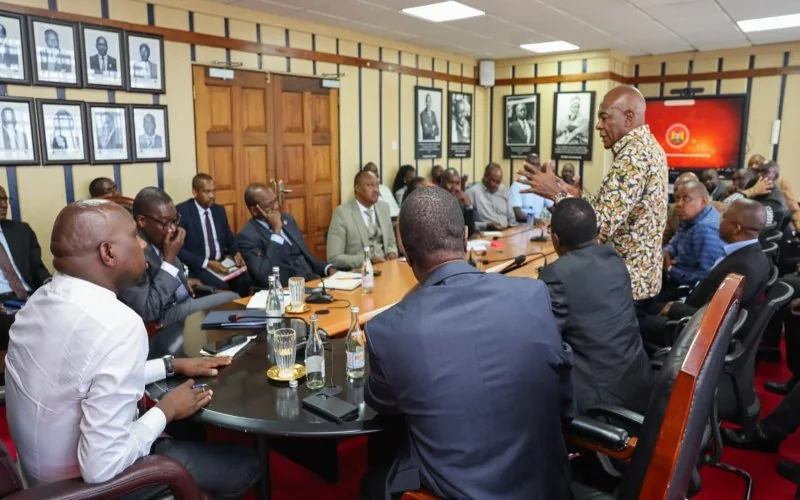
Government officials, led by Interior Cabinet Secretary Kipchumba Murkomen, are expected to walk into “high-level” negotiations in the coming days. Still, because the transport sector is holding firm on its demands for systemic change rather than only “modest” price tweaks, the route toward a lasting resolution stays precariously narrow.






Leave a Reply