

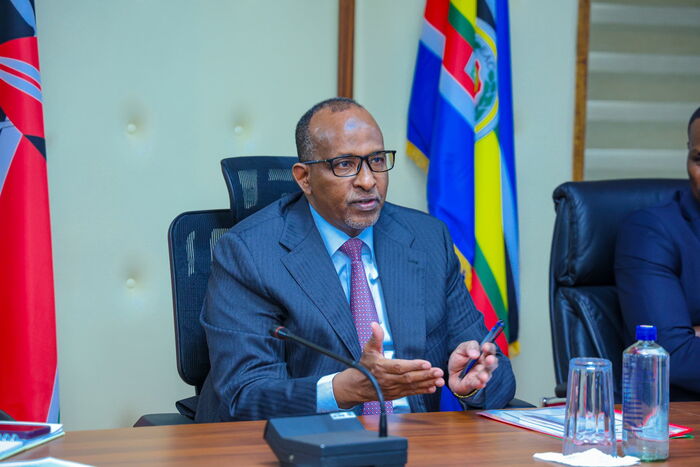
Health Cabinet Secretary Aden Duale has moved to reassure the public following a surge in emergency surveillance measures, confirming that while Kenya remains free of any confirmed Ebola Virus Disease (EVD) cases, the nation has ramped up testing protocols for suspected individuals at high-risk entry points.
The directive comes as the Ministry of Health tightens border controls in response to a rapidly escalating outbreak of the Bundibugyo strain of the Ebola virus currently devastating parts of the Democratic Republic of Congo (DRC) and Uganda. The World Health Organization (WHO) recently classified the regional crisis as a Public Health Emergency of International Concern, prompting Kenya to activate its National Incident Management System.
“I wish to reassure all Kenyans that, as of today, Kenya has not reported any confirmed Ebola cases linked to the ongoing regional outbreak,” CS Duale stated. However, he confirmed that health authorities have been screening hundreds of travellers—including international arrivals, truck drivers, and cross-border traders—at key transit hubs.
The government has prioritized the testing of any individual exhibiting symptoms such as fever, vomiting, or unexplained bleeding, with seven suspected cases recently subjected to rigorous laboratory analysis as a precautionary measure. All seven tests, according to health officials, returned negative results.
The current outbreak, which originated in the Ituri Province of the DRC, has already claimed over 180 lives across the region. Unlike more common strains, the Bundibugyo virus presents unique challenges, as there is currently no licensed vaccine or specific therapeutic treatment for it, making early detection and isolation the only effective defense.
To bolster preparedness, the Ministry of Health has deployed Rapid Response Teams on a 24-hour standby basis and equipped four national reference laboratories to handle testing around the clock. Surveillance has been particularly intensified in border counties such as Busia and those along the northern corridors, where cross-border mobility remains high.
CS Duale has urged the public to avoid panic and to rely exclusively on official communication channels. The ministry is working closely with the WHO and the Africa CDC to map population movements and enhance infection prevention protocols at all points of entry. As the regional situation remains volatile, the government maintains that the country’s “highest-level” alert status will remain in effect until the threat of cross-border transmission is neutralized.













Leave a Reply