

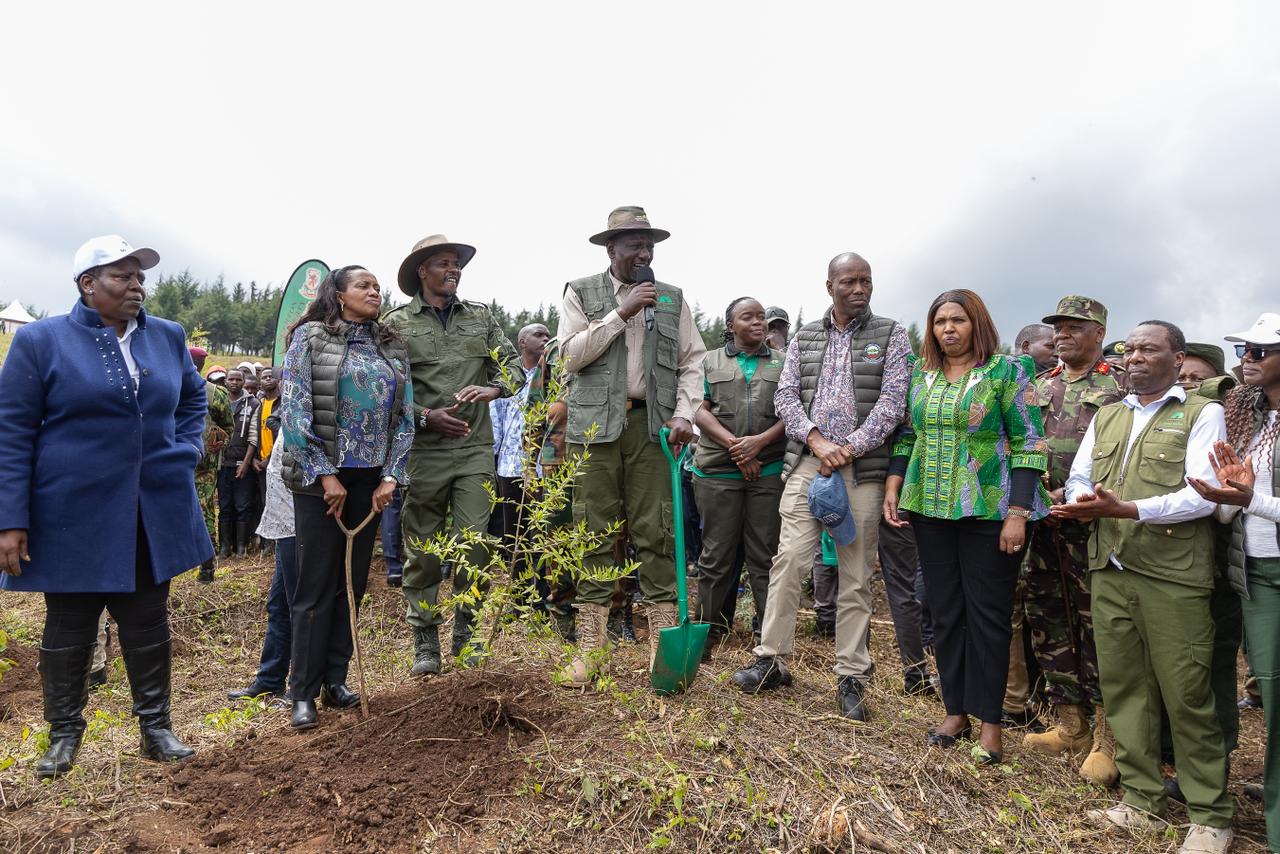
In what is being described as one of the most ambitious infrastructure drives in the country’s history, President William Ruto has announced a KSh 15 trillion financing scheme to construct 10,000 kilometres of new tarmac roads, alongside the dualling of key highways, marking a bold push to modernise Kenya’s transport network.
What’s on the Table
Speaking at the Mashujaa Day celebrations in Kitui County, President Ruto outlined the broad contours of the plan:
- A dual carriageway upgrade for at least 1,000 km of major highways — including the Rironi-Nakuru-Mau Summit-Eldoret-Malaba route, the Makutano-Embu-Meru corridor, the Kitengela-Namanga road, and the Mombasa-Nairobi highway.
- A separate programme to construct an extra 10,000 km of new tarmac roads, designed to link farmers, traders and manufacturers in all 47 counties to key markets, ports and urban hubs.
- A funding target of approximately KSh 15 trillion, to be mobilised through a mixture of public-private partnerships, infrastructure bonds and international financing, as part of the government’s broader KSh 31 billion (approx. US$ 310 million) decade-long infrastructure investment framework.
Why This Is a Game Changer
The plan carries profound implications for Kenya’s economy and politics:
- It aims to significantly reduce transportation costs, improve road connectivity in remote and underserved counties and boost regional trade and logistics.
- The scale of funding and construction heralds a shift in how Kenya mobilises resources—moving beyond annual budgetary allocations to large-scale infrastructure debt and investment mechanisms.
- Politically, the timing is critical: with the 2027 General Election cycle approaching, the massive rollout could become a central pillar of the ruling coalition’s campaign message.
Risks and Challenges Ahead
Despite the bold announcement, analysts caution several risks that could derail the programme:
- Funding gap: Mobilising KSh 15 trillion will require disciplined public finance, dependable PPP frameworks and investor confidence — any shortfall may delay projects.
- Execution capacity: Construction of 10,000 km plus dualling works for 1,000 km demands massive procurement oversight, skilled labour, supply chains and robust roads agencies.
- Regional equity and corruption: Ensuring fair distribution across counties and guarding against graft will be essential to avoid accusations of favouritism or wasteful contracts.
- Economic sustainability: The surge in infrastructure debt must align with Kenya’s long-term debt management and macro-economic stability to avoid capital stress.






Leave a Reply