
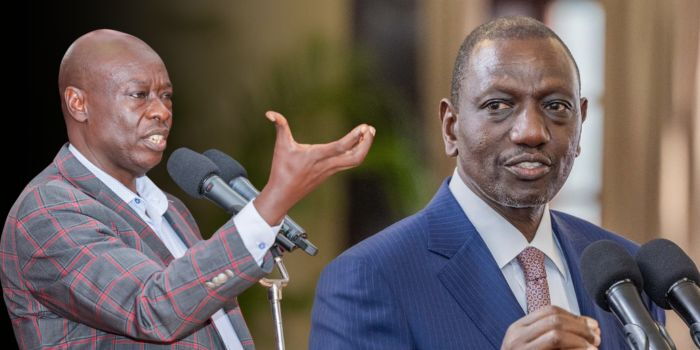
The former deputy president of Kenya, Rigathi Gachagua, aims to destroy the existing fiscal policy of the current administration through his “Scorched Earth” legislative campaign, which demands immediate elimination of three financial agreements, including the Government-to-Government (G-to-G) fuel deal and the Affordable Housing Levy and the recent NSSF increases.
The authorities regard the intervention as a “financial insurgency” that aims to destroy the core funding mechanisms that support national budget operations. Gachagua has identified these government measures as “predatory instruments of poverty” because they serve their goal to stabilize the economy while the government defends them as essential measures.
The demand shows its “twisted” nature through both its timing and its selection of targets. Gachagua uses the G-to-G fuel arrangement elimination demand to challenge more than a trade agreement because he claims the government systems have failed to control the Kenyan shilling. Gachagua demands elimination of the Housing Levy, which serves as the main element of the president’s legacy.
A senior political economist observed that all reform efforts have failed because they have shifted into a complete policy reversal.
Gachagua uses his current position to destroy the existing tax system according to his political objectives. The state will suffer an immediate multibillion-shilling financial loss, which could lead to sovereign default if the government eliminates these fees.
Gachagua is requesting a meeting with Cabinet Secretaries to hold them responsible for the “economic distress” that these policies have generated. He now operates as a “public auditor” based on the current cost-of-living crisis, which he uses as a tool to separate the Cabinet from the people of the country who are suffering economic hardship.












Leave a Reply