

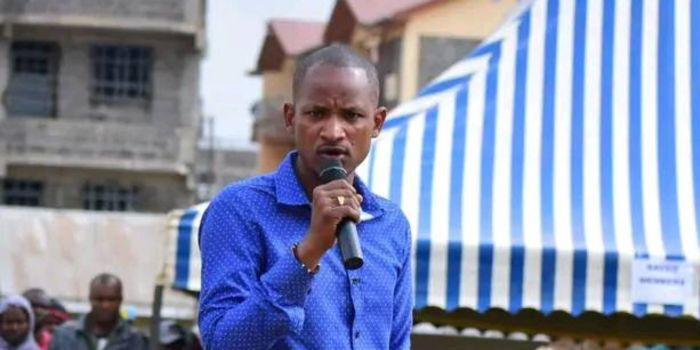
In a remarkable rise of internal political frictions, Embakasi East MP Babu Owino has openly turned down the reported coalition overtures from the Orange Democratic Movement (ODM) to President William Ruto’s United Democratic Alliance (UDA), thereby sparking a heated discourse in one of the most powerful political parties in Kenya.
During a confrontational interview with Citizen TV, Owino not only criticized the ODM’s current lineup but also warned that being with UDA is like putting the late Raila Odinga’s legacy at risk and changing the party into a lower status rather than a separate political power.
His statements are an indication to the young voters of a possible shifting of their support and an intensifying of the already existing party divisions right before the important 2027 general elections.
Owino did more than just oppose the idea of a coalition; he challenged ODM to get a youth-led future, and he lobbied the party to promote the younger leaders to the crucial decision-making levels to make the party’s status and energy restored.
He contended that the political success of the next generation of Kenya is mainly the issue of the young, energetic voices who will take the path of principled opposition over power-sharing and politics done the hard way.
The intervention made by the MP highlights the deepening divide within ODM after the death of Raila Odinga, with various factions arguing whether to continue and even deepen the ruling coalition or take the path of a nationwide opposition that is independent.
Those opposing the coalition argue that the party would be sacrificing its identity by being too close to UDA, while its advocates claim that maintaining the government’s influence requires wider alliances. Reports have surfaced of similar dissent within the party’s ranks, with some MPs threatening to leave if the strategic direction remains unchanged.
Owino’s demand for an ODM party that revolves around the youth—with its characteristics of vigor, creativity, and generational change—is already echoing through various social and political networks. The political analysts who have been analyzing the situation cautioned that the rejection might be the cause of a significant shift in the winning alliance among the young voters, as their votes will count most in the next election.
The ongoing argument is increasingly asking questions that need to be answered urgently regarding the ODM’s future identity, strategy, and ability to gather under one banner diverse political aspirations as Kenya nears a significant moment in its democratic history.





Leave a Reply