

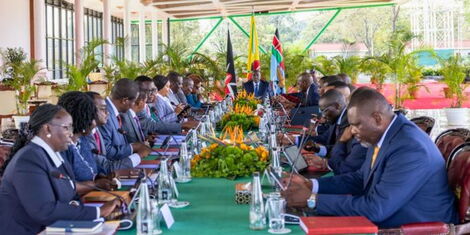
In a landmark ruling that has sent shockwaves through the corridors of power, the High Court has declared President William Ruto’s current Cabinet unconstitutional. A three-judge bench, led by Justice Eric Ogola, issued a scathing verdict on Tuesday, June 30, 2026, finding that the executive team fails to meet the mandatory constitutional “two-thirds gender principle.”
The court has directed the President to reconstitute his Cabinet within 120 days to ensure compliance with Article 27(8) of the Constitution, which prohibits any appointive body from having more than two-thirds of its members from the same gender.
A Cabinet Under Siege
The petition, which challenged the inclusivity and legality of the current executive lineup, pointed to the glaring lack of gender parity. According to the court’s assessment, the Cabinet—comprising 25 members—currently features 18 men and only 7 women. This representation stands at approximately 28 per cent, falling well below the legal threshold which dictates that at least nine positions in a 25-member body must be occupied by the under-represented gender.
“The appointing authority, being the President, is hereby directed to make appointments for Cabinet Secretaries in conformity with Article 27(8) within 120 days from the date of this judgement,” the bench ruled.
Broader Implications for Governance
The ruling also addressed heated public debate regarding the reappointment of former Cabinet Secretaries and the inclusion of opposition figures in the government. While the court declined to invalidate the appointments solely based on political affiliation or past dismissals, it expressed deep concern over the “constitutional logic” of the President’s recent Cabinet reorganization. The judges questioned the substance of the reshuffle, noting that reinstating previously dismissed ministers while justifying the initial dissolution as a response to public dissatisfaction raises serious questions about transparency and accountability.










Leave a Reply