

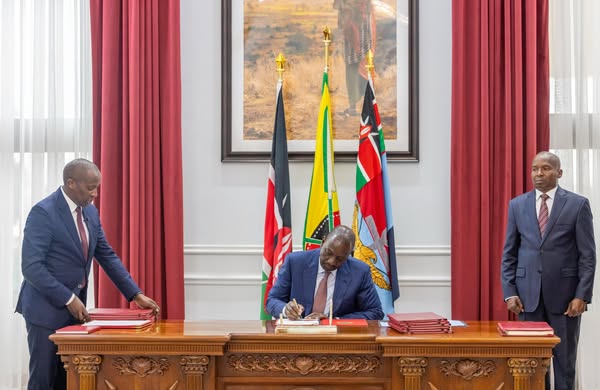
President William Ruto has officially signed the Division of Revenue Act, 2026 into law, bringing a decisive end to months of legislative deadlock and securing a KSh428 billion equitable share for the country’s 47 counties for the 2026/27 financial year. The signing, conducted at State House in Nairobi, marks a critical milestone in the national budget-making process, providing much-needed fiscal certainty for devolved units.
The breakthrough follows seven intense rounds of mediation between the National Assembly and the Senate, which had previously clashed over the exact funding threshold. The final figure of KSh428 billion—a notable increase of KSh13 billion over the previous fiscal year—serves as the cornerstone for county planning, covering essential services such as healthcare, agriculture, and water infrastructure.
A significant victory for the Senate was the successful reinstatement of Clause 5 of the Bill. This vital provision acts as a legislative shield, protecting county allocations from any potential reductions that might arise should the national government face revenue shortfalls throughout the financial cycle. By anchoring the budget on an estimated KSh2.9 trillion in total shareable revenue, the Act ensures that the 21 per cent allocation to counties remains insulated against fiscal volatility.
“This settlement is a constitutional imperative that reflects the needs of our citizens,” stated Samuel Atandi, Chairperson of the National Assembly’s Budget and Appropriations Committee, following the consensus. Senators echoed this sentiment, describing the mediation as a challenging yet necessary path to safeguarding the future of devolution.
The new law paves the way for the immediate enactment of the County Allocation of Revenue Bill, which will dictate the specific distribution of funds among individual counties. With the start of the new financial year fast approaching on July 1, the executive assent offers a lifeline to governors who had warned that any further delays would paralyze basic service delivery. As the country transitions into this new fiscal period, all eyes remain on the Treasury to ensure that disbursement schedules are honored, preventing the persistent cash-flow crises that have haunted devolved governance in years past.











Leave a Reply