

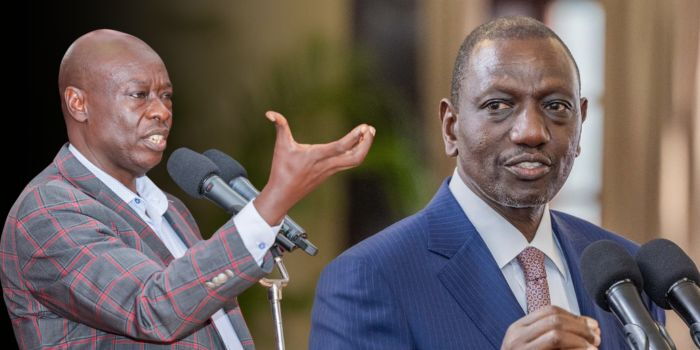
Kenya is witnessing a rapidly intensifying political storm after a series of violent and disruptive incidents involving former Deputy President Rigathi Gachagua, prompting fierce debate over whether the state is actively targeting him as the nation gears up for the 2027 General Election.
The controversy erupted this week with renewed claims by Gachagua and his allies that orchestrated attacks and interference are part of a broader campaign to undermine his political relevance.
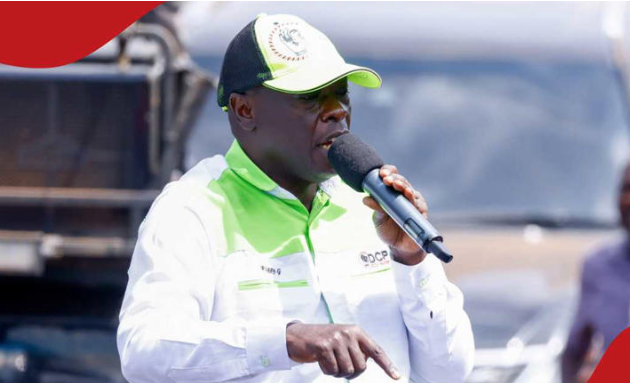
Gachagua, leader of the Democracy for the Citizens Party (DCP), has alleged that security forces and unknown assailants violently disrupted a church service in Othaya, Nyeri County, on January 25, forcing congregants to flee as tear gas and gunfire erupted inside the place of worship.
He publicly accused elements within the government of orchestrating what he described as an assassination attempt in a space meant for peace.
The former deputy president’s claims have thrust Kenya’s political climate into uncharted territory, with some supporters interpreting the string of confrontations—including earlier disruptions at funerals, rallies, and public gatherings—as coordinated efforts to weaken Gachagua’s influence in his stronghold.
State officials, however, have firmly rejected accusations of targeted political persecution. Deputy President Kithure Kindiki denied any connection between his staff and the church incident, asserting that images shared by Gachagua were misidentified and that the disruption is being mischaracterized for political gain.
Public Service Cabinet Secretary Geoffrey Ruku also weighed in, claiming that the chaos at the Othaya church was stage-managed by Gachagua’s camp to elicit public sympathy and discredit the government—an assertion that deepens the divide between the ex-deputy president’s narrative and official accounts.










Leave a Reply