


The former deputy president has declared that Saka, the current governor of Nairobi, will be a one-term governor and also has thereby opened a huge political war that is going to rage on and take 2027 a lot of blood and bruises before the winner is announced.
The remarks made by Gachagua during the Nairobi tour stop in Starehe Constituency on Thursday have immediately received very severe reactions from both political allies and foes.
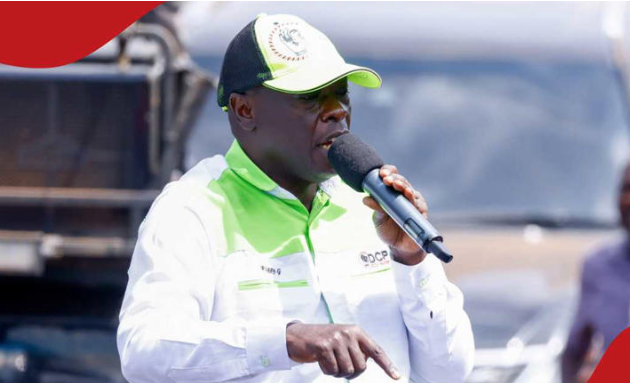
Gachagua, while addressing the large crowd, criticized Sakaja’s leadership and connected it to the city’s urban challenges that have been persistent in Nairobi. In what could be called a political ultimatum, the leader of the Democracy for Citizens Party (DCP) asked for an apology from the residents for having supported Sakaja in the past and even then insisted that “the city needs a new leader” when the governor’s term expires.
Gachagua’s move marks an extraordinary direct challenge to the sitting governor by a prominent political figure; the debate over leadership, which had been simmering, has now turned into a full-scale political confrontation.
Observers argue that Gachagua not only challenged Sakaja’s performance but also tied his demand for Sakaja’s defeat at the polls to a widespread resentment against the present government’s management of urban affairs in the capital of Kenya.
Political commentators interpret the statements as a setup of power plays, where the main goal is to change the existing relations and the people’s way of thinking towards the elections of 2027.
Historically the Nairobi region, which is a major base with a large number of votes to be cast, has been very unstable, with governors constantly winning their first term but not being able to get their second term—this happening is referred to as the “one-term curse.” Normally, being an incumbent is a political advantage, but the recent history shows that Nairobi political leaders are under a lot of public scrutiny and that they are vulnerable to losing elections.
Political opponents and Sakaja supporters have already reacted by accusing Gachagua of promoting national political disputes in local government matters and of dividing the larger coalition that has been backing devolution.
The critics are of the view that mudslinging between the opponents has the potential of creating greater cleavages when the new city leadership is urgently needed to tackle the major challenges that the city faces.
There has been no official communication from the team of Councilor Sakaja regarding the matter, but some reliable sources are of the opinion that the governor will change his stance to the one of emphasizing the development and will directly engage with the voters to counteract Gachagua’s narrative.
The situation is getting tenser; the political theater in Nairobi is undergoing a fast transformation—and its effects might be felt throughout the entire 2027 election scenario.








Leave a Reply