
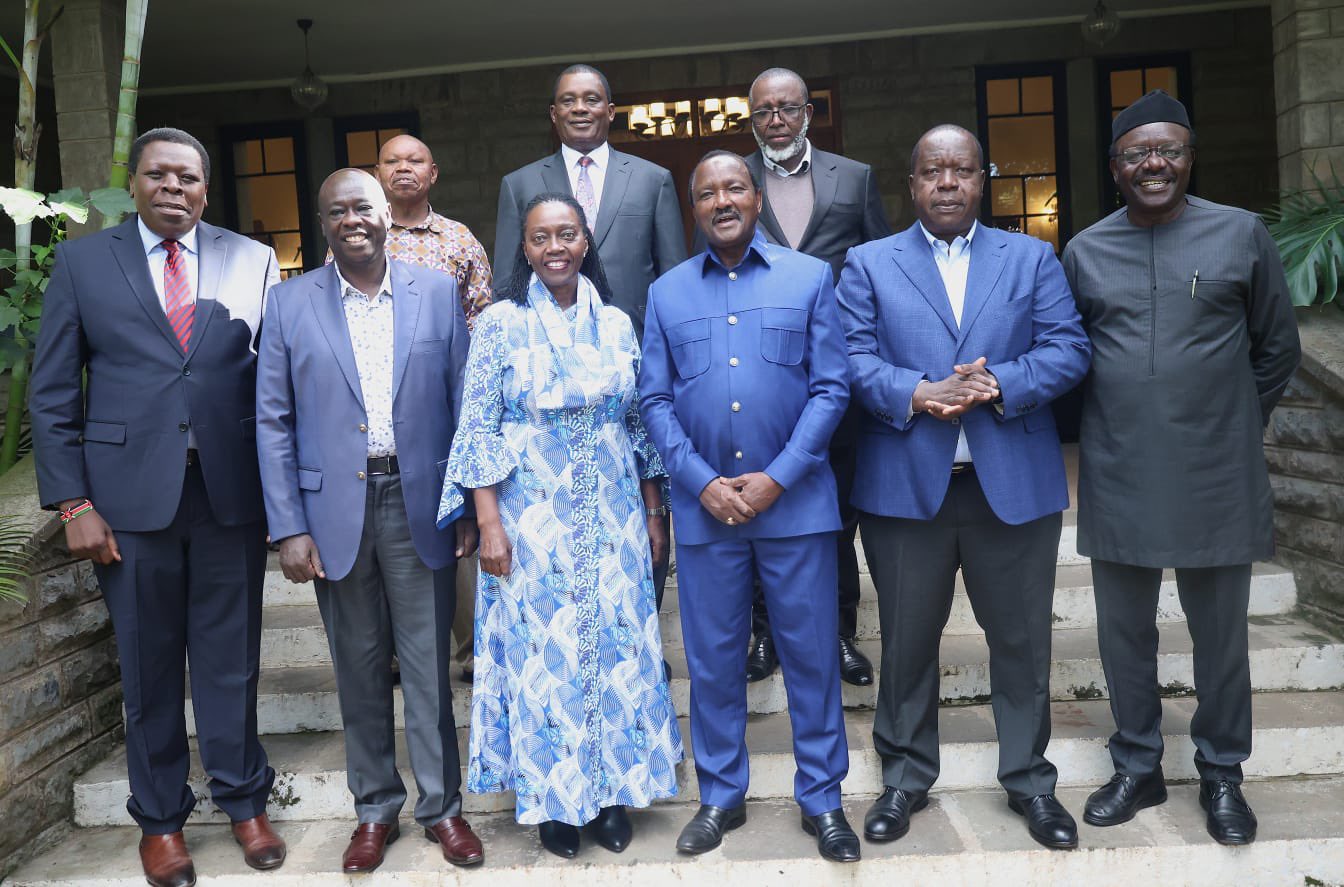
A significant schism has surfaced within the United Opposition alliance, and it is a bipartisan feud between former Deputy President Rigathi Gachagua and Wiper Party leader Kalonzo Musyoka that is the very issue at the heart of it, as they are still a long way apart in their opinions regarding when to make the coalition’s presidential candidate public.
Timing is the key issue in this dispute. Kalonzo has been persistent that the United Opposition should declare its candidate in the first quarter of 2026 in order to gain support and offer a strong front against the president, William Ruto, who is already trying to win a second term.
In his message at the end of the year, he emphasized that the early disclosure of the candidate would not only show that the organization was ready but also give the voters a clear picture of the opposition’s strategic direction. He also showed confidence in his own chances in the coalition.
On the other hand, Gachagua has adopted a completely opposite position, turning down requests for an early announcement. Through the political gatherings he attended, including a burial ceremony in Murang’a County, Gachagua maintained his view that announcing a candidate too early could lead to very difficult political circumstances for that person and even make it harder to get more members into the coalition.
He advocated for the opposite and went on to say that the flagbearer should be made public only a few months before the polls to allow for negotiations and the inclusion of new partners.
The public disagreement of views between the two leaders—who have previously been represented as a single powerful force—reveals the growing strategic rivalries within the alliance.
Analysts caution that this confrontation might give other aspirants within the United Opposition the courage to come out and compete for the support that could be so detrimental to the coalition at such a crucial moment.
The analysts came to the conclusion that Gachagua has applied the strategy of the past elections—late nominations in this case—as a means of bringing about unity in the party. On the other hand, Kalonzo’s advocating for an early nomination is a sign that he wants to win and take control of the agenda right at the beginning of the competition.
The different opinions on the matter signify deeper issues such as the succession fears, the forming of coalitions, and the political positioning in the elections as Kenya prepares for one of the electoral battles that will be most fiercely contested.
The opposition is under the spotlight again, not least because neither side is prepared to give in, and the United Opposition has to prove its strength in numbers against the government.
As the confrontation gets fierce, both supporters and adversaries are keeping an eye on the situation and are saying that if the internal divisions are not patched up, the opposition will lose the undecided voters, and this will give Ruto’s camp a strategic advantage in the coming months.






Leave a Reply