

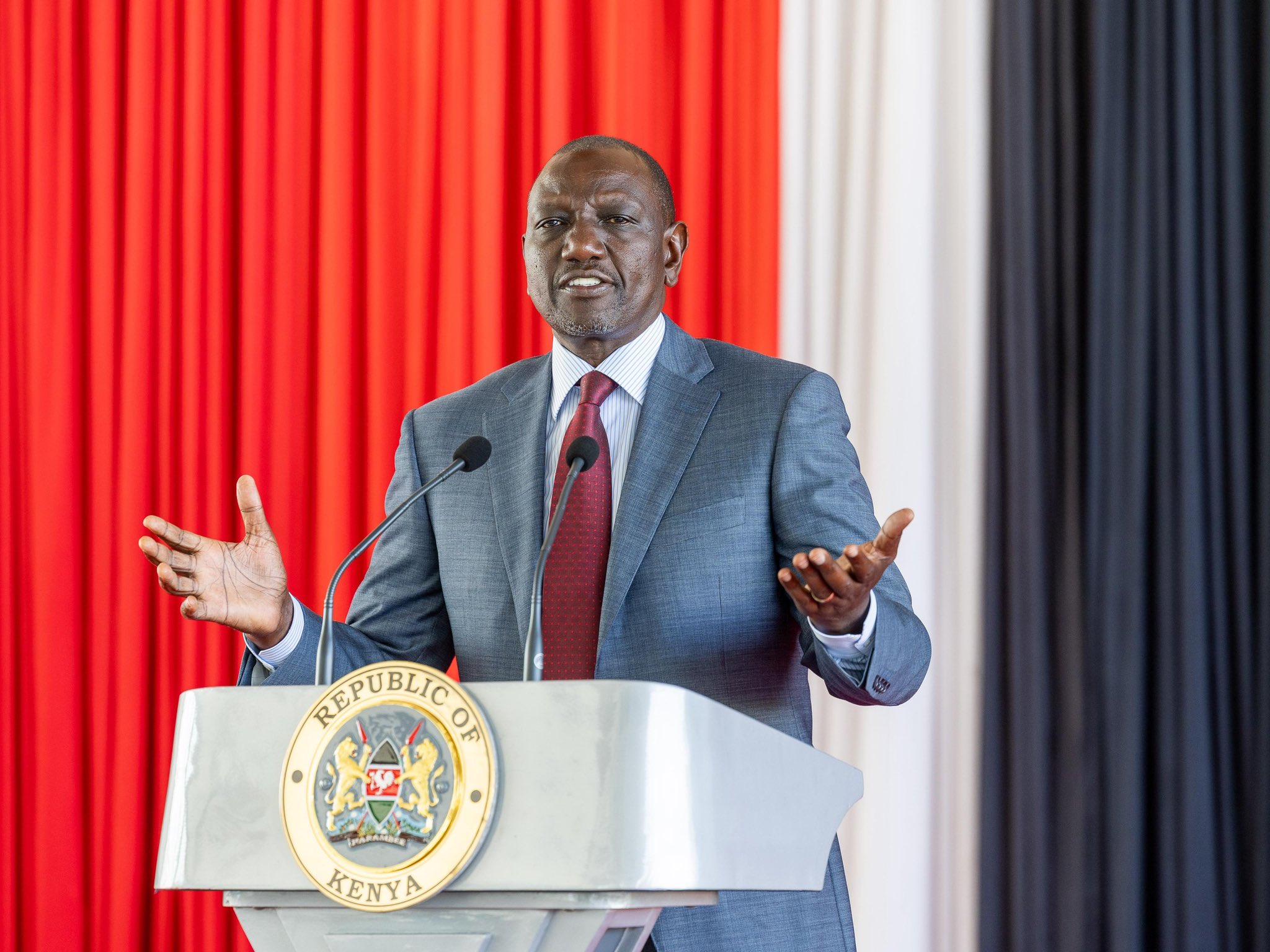
A seismic shift in the political landscape has been exposed by the latest TIFA Research survey. The data reveals a massive disconnect between the leadership of the Orange Democratic Movement (ODM) and its grassroots base. Despite several high-profile ODM figures joining the “broad-based” cabinet, a staggering majority of the party’s supporters remain vehemently opposed to President William Ruto’s re-election bid.
According to the survey, only 19 percent of ODM supporters currently favor President Ruto as their preferred candidate for the 2027 General Election. This statistical bombshell suggests that the government’s strategy of co-opting political elites has failed to win over the hearts and minds of the rank-and-file opposition voters.
The findings point to a deepening legitimacy crisis for the current political arrangement. While the “Handshake 2.0” was designed to stabilize the country and consolidate a supermajority, the grassroots data tells a different story. The entry of key lieutenants like Opiyo Wandayi and John Mbadi into the Cabinet was expected to “deliver” the Nyanza and Western regions to the Kenya Kwanza fold. Instead, 81 percent of the party’s base appears to be searching for an alternative.
Analysts believe that the gap is getting bigger because the trust in the coalition government to be a “commoners’ pact” is very low; thus, it is said to be an “elite pact” that neglects the economic woes of common people. According to the survey, it is still but a mere impression that the ODM loyalists have since their political involvement at the very top has not brought about any noticeable changes in terms of food prices being lowered or increased and improved services being offered at the bottom.
The most shocking finding for both the government and the opposition is that there is no one waiting to inherit the 81 percent of disgruntled ODM voters who have not expressed their dissatisfaction with the party and its leaders. Just as Raila Odinga is moving to the African Union Commission (AUC), so slowly but surely his support among the electorate is waning.
The “orphaned” constituency of voters is rejecting the mainstream politicians more and more. The TIFA survey reveals that a large number of these backers have already shifted their attention to “non-traditional” or “radical” options, which are often viewed as the other end of the spectrum when it comes to politics. This uncertain power resembles the non-violent resistance that was led by a lack of leadership during the mid-2025 protests, and together they form a new dynamic that might be challenging for the old political methods to control as the year 2027 draws nearer.
The 19 percent backing among the supporters of ODM seen by President Ruto is a danger sign for his reelection calculations. The government, in order to win the first round in 2027, does not need only the support of Cabinet Secretaries but also, and more importantly, a considerable portion of the opposition to make up for the losses in Mt. Kenya and other areas of the country that might be disaffected or hostile to it.
The research underscores that the so-called “development bait”—the lure of infrastructure projects in return for political loyalty—is not having the desired effect at all. Specifically, the electorate in Nyanza seems to be very passive, refusing to vote for any party until they can feel the economic relief coming directly to their households.
The “Nyanza Pivot” is in the making and… If the present scenario persists, the 2027 elections will not be the face-off between two major coalitions but a competition between the established elite alliance and a large, disappointed base of “political orphans” who consider themselves unrepresented by both the government and the opposition that was co-opted.









Leave a Reply