

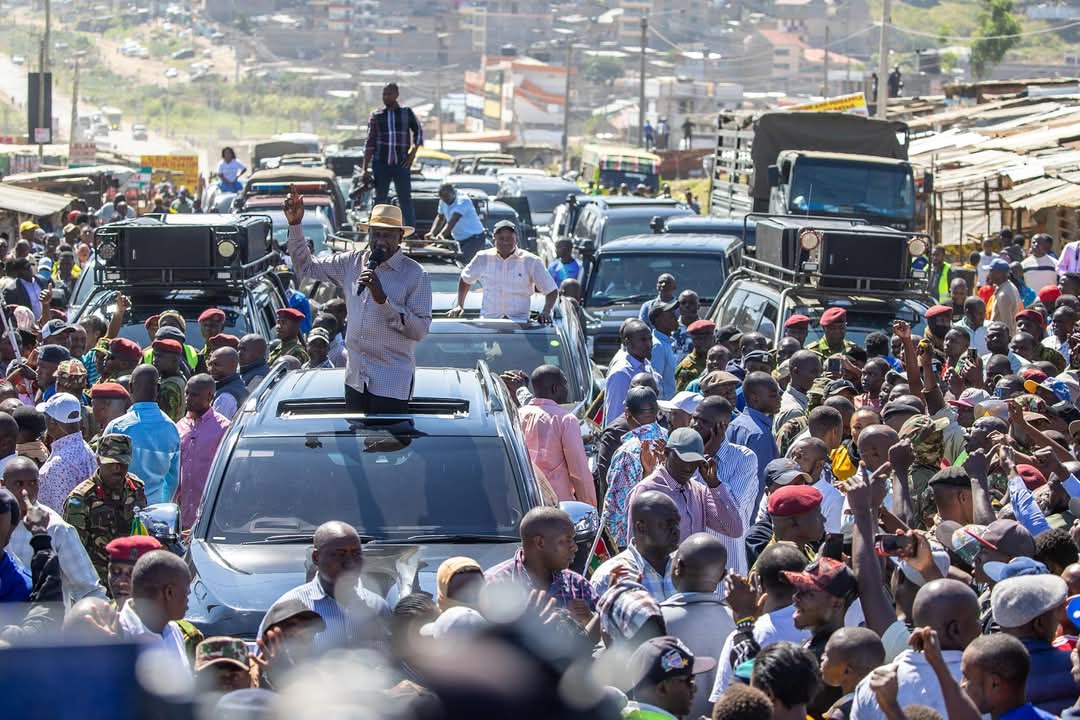
President William Ruto and Interior Cabinet Secretary Kithure Kindiki issued a forceful political appeal in Makueni, urging residents of the Ukambani region to reject opposition leaders they described as lacking direction and credible development plans.
The remarks came during a high-energy address where the President told locals to support leaders focused on tangible progress rather than what he termed as divisive politics and empty rhetoric.Ruto emphasized that the country is entering a crucial period where citizens should align themselves with leaders committed to economic transformation, investment opportunities and service delivery.
He argued that political players who only reappear during elections with promises but no clear agenda have held the region back for years. According to the President, the government is determined to deliver infrastructure expansion, youth empowerment and agricultural support, and areas that cooperate stand to benefit substantially.
CS Kindiki reinforced the message, calling on the region to rise above what he labelled as habitual political theatrics. He stated that Kenya’s future depends on leaders who can articulate real solutions and work within national development frameworks. Kindiki warned that those who rally support through criticism without offering practical alternatives are out of touch with the demands of modern governance.
The Ukambani region, historically a decisive swing bloc in national elections, has become a key political battleground ahead of the next polls. Analysts say the statements from Ruto and Kindiki signal a heightened effort to consolidate support early, particularly as national political temperatures begin to rise.
While the remarks were targeted at unnamed opposition figures, they mark one of the most pointed public pushes by government officials to challenge their critics directly in the region.The sentiment is expected to draw strong reactions from opposition leaders, who may interpret the statements as an attempt to undermine political diversity and suppress legitimate criticism.
However, government allies believe the message will resonate with citizens who feel fatigued by repetitive political cycles without measurable improvement.
As the country edges closer to the election period, Ukambani voters now find themselves at the centre of a sharp national campaign narrative—one pitting promises of development delivery against accusations of directionless political posturing.
With rising pressure on both sides to present concrete agendas and visible progress, the response from local leaders and the opposition will shape the tone of engagements in the coming months. Kenya’s political stage is already shifting, and the battle for Ukambani appears poised to become one of its defining fronts.










Leave a Reply