

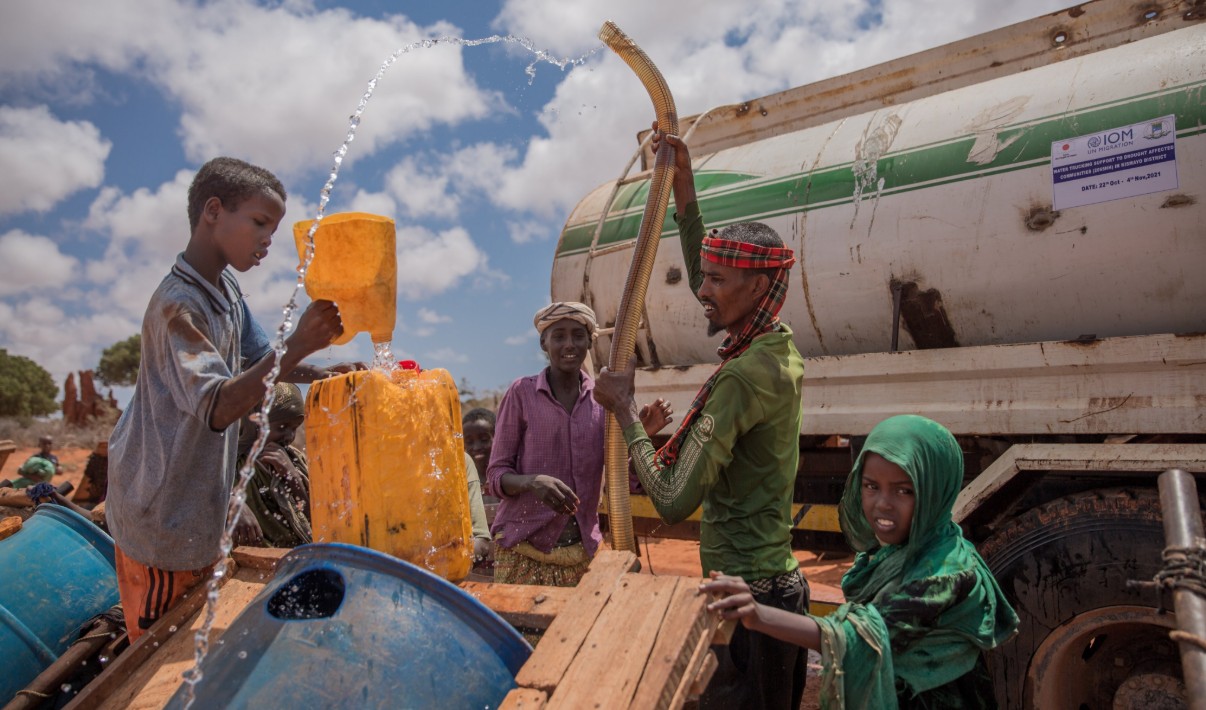
The United Nations has released an urgent $10 million allocation from its emergency humanitarian fund as the Horn of Africa teeters on the brink of a catastrophic famine. With the country’s food security status rapidly deteriorating, UN humanitarian chief Tom Fletcher issued a chilling warning Sunday: the window to prevent mass starvation is closing with alarming speed.
The emergency injection is designed to provide critical, lifesaving support—including food, nutrition, healthcare, and clean water—to approximately 640,000 of the most vulnerable people across Somalia. Data from the Integrated Food Security Phase Classification (IPC) reveals that 6 million Somalis, nearly one-third of the population, are currently grappling with acute food insecurity. Of this group, 1.9 million are classified as being in “emergency” conditions, teetering on the edge of survival.
The crisis is being fueled by a lethal convergence of factors, including the failure of consecutive rainy seasons, systemic drought, and escalating commodity prices linked to regional instability in the Middle East. Furthermore, conflict-driven displacement has reached a boiling point, with over 500,000 people forced to flee their homes since the beginning of 2026. This influx of displaced persons has overwhelmed local support structures, leaving families with no resources and nowhere to turn.
The UN has identified specific “red zones” where the risk of famine is no longer a distant threat, but a plausible reality. The Bay and Bakool regions of South West State are at the center of the emergency, with the Burhakaba district specifically flagged for reaching “extremely critical” malnutrition levels.
“The situation has deteriorated due to increased food insecurity, widespread malnutrition, and reduced access to basic services,” Fletcher stated in a formal address.
Humanitarian agencies on the ground, including Action Against Hunger, report a massive surge in admissions to stabilization centers, noting that in some districts, severe malnutrition has become the norm rather than the exception. As the country faces a race against time, the UN is calling for a sustained, large-scale humanitarian intervention to prevent the loss of life from reaching a point of no return.














Leave a Reply