

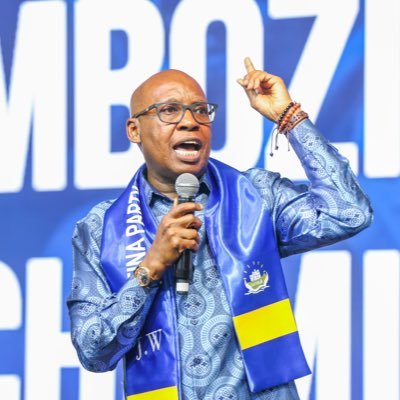
In a stinging rebuke that has reeled, infused, and forced admission in Kenya’s political atmosphere, Jimi Wanjigi, an important political figure, unwrapped a harsh critique of the President William Ruto government, blaming it for not keeping the great majority of its pre-election promises, with the next general election being only 598 days away.
Wanjigi took the government’s performance to the bare bones during the consecration of the Grand Diocesan Cathedral in Kiambu on Saturday, and it could be regarded as one of the most devastating political appraisals of the current administration—claiming that just 19 out of 259 campaign promises have been kept. This is an extremely low rate of only 7%, which is a figure that has been travelling and causing discussions all over the country.
“Kenya Kwanza made 259 promises, out of which only 19 have been fulfilled. That accounts for only 7 percent,” proclaimed Wanjigi, his words reverberating through the church’s open grounds with a heavy tension.
“Wanjigi proclaimed that this was a national shame that the government would be risking it and being faced with people’s wrath if not drastically transforming their course.
Though it was a harsh critique, Wanjigi nevertheless took a moment to give a rare and unanticipated gesture of acknowledgment—he spoke of the moving away from personality-based politics to the issue-based discourse as one of Ruto’s merits. But the concession soon faded when he returned to his main theme that the government has not lived up to its high promises.
Political analysts have begun to view Wanjigi’s accusations as a calculated pre-election strike that would tear apart the ruling alliance and fuel up the opposition forces for the battle of 2027—a year that many predict could change the whole scenario of Kenyan politics dramatically. To reason their stand, critics point out the widespread discontent with the economy, the unsatisfactory results of the major social programs, and the government’s inability to meet people’s expectations, claiming that all these factors have contributed to the growing disaffection of the voters.
Criticism is not restricted to one party or one opinion. Politicians, both from the ruling and the opposition sides, as well as those who stay outside the government circle, have all made similar statements pointing out the dissatisfaction with the administration on various matters such as agriculture, education, and even the national vision and governance effectiveness. Some have even gone so far as to say that the government is just pursuing the tales of getting the first-world status, but in reality, it is not tackling the basic needs at the domestic front.







Leave a Reply