

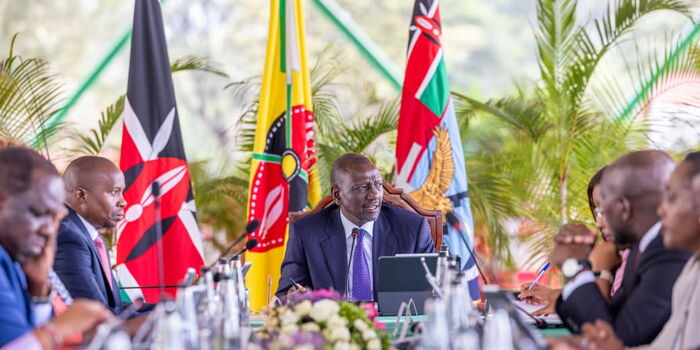
The High Court has declared all presidential advisory office creations and President William Ruto’s appointment of 21 aides to be unconstitutional because these actions started from an illegal foundation.
The court ordered an immediate suspension of all salary and benefits payments to the affected officials while it required complete audits of all executive positions linked to this matter. The Thursday judgment presents a major challenge to executive power because it establishes essential limits that determine how much authority presidents possess.
Justice Bahati Mwamuye reached the conclusion that the Office of the President exceeded its constitutional authority when it created advisory positions without following required Public Service Commission (PSC) and Salaries and Remuneration Commission (SRC) procedures. The court found that the process bypassed key safeguards meant to ensure transparency, merit, and fiscal responsibility when creating and staffing public offices.
The court invalidated all advisory office creation decisions and 21 adviser appointments through its ruling, which declared those actions to be automatically invalid because they never possessed any legal power. A permanent injunction was issued barring government entities from recognizing, processing, or disbursing any compensation tied to these offices.
The Katiba Institute filed a petition that resulted in the judgment because it claimed that the executive branch violated constitutional and legal protections through its selection process for advisers, which operated without an open, competitive, or participatory process. The court confirmed that the PSC functioned merely as a procedural step and that essential public participation should have taken place for offices that required major budgetary expenditures.
The High Court ordered the PSC to execute a complete office examination, which should take 90 days to finish for all Executive Office of the President offices that have operated since August 2022. The court requires the government to terminate all positions that it established without legal authorization, which the government must then report back to the court.
The ruling affects several advisers who held high positions because they worked in constitutional affairs and economic policy and national security and other important government operations. According to analysts, the decision will lead to increased examination of executive appointments, which will change the process for creating advisory positions in future administrations.
The government has not delivered its complete response to the ruling yet because the legal defeat requires immediate examination of executive hiring processes, which will delay the implementation of presidential programs that depend on these staffing methods.










Leave a Reply