

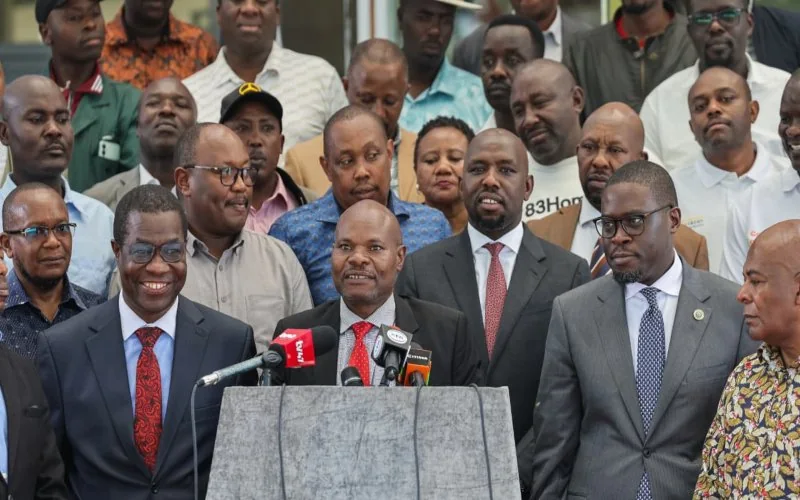
Public transport operators have vehemently denied claims that their decision to suspend the nationwide strike over soaring fuel prices was influenced by bribery in any way. The suspension, which gives a temporary reprieve for commuters, comes after two days of intense disruption that left thousands stranded across Nairobi and other major towns, sort of.
Forward Travellers Chairman Paul Thiong’o, speaking in a media interview on Wednesday, dismissed rumors of illicit payouts. He said the pause in industrial action was reached after extensive negotiations with officials from the Ministries of Interior and Transport, as well as Nairobi Governor Johnson Sakaja. Thiong’o added that the operators sought assurances from leadership rather than, say, immediate legislative changes.
“There is no bribery that happened; for the matatu strike to be suspended, we did not betray Kenyans,” Thiong’o stated. He pointed out that stakeholders are placing their trust in Nairobi Governor Johnson Sakaja, who acted as a guarantor in the talks, and also in the expectation that the president will intervene when he returns from abroad.
The strike, during which roads were blocked and there were reports of clashes with police, remains in a fragile state. Interior Cabinet Secretary Kipchumba Murkomen confirmed that both government and transport representatives agreed to a one-week window to facilitate structured dialogue. That period is meant to tackle the underlying reasons for the protests, especially the record-high pump prices.
Still, skepticism is there, and honestly, regarding how well these negotiations are going to work, it is not quite clear. Alexander Riithi, Head of Programmes at The Institute for Social Accountability (TISA), said that the attention ought to shift toward Parliament because the legislative body effectively owns the mandate around taxation policies. He also cautioned that if the settlement is left only to the business talks, it could easily ignore the wider economic ripple effect on the public.





Leave a Reply