

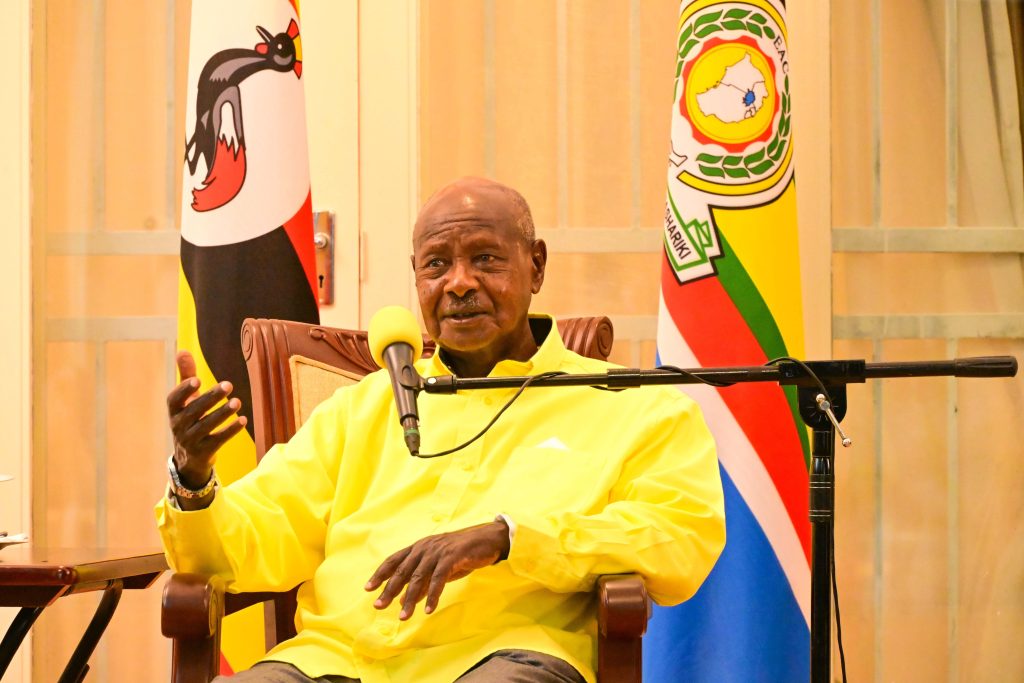
In an action that has rippled through East Africa and raised a hotly contested issue for the world, Yoweri Kaguta Museveni has officially gained a seventh consecutive term as the President of Uganda.
The fertile commission’s announcement means the president, who has ruled for so long, will continue to exercise power nearly four decades after the very first day, which not only makes him a “father of the nation” but also strongly supports his reign as one of the longest in Africa.
Kampala’s atmosphere is still a highly charged mix of government-organized festivities and a heavy military presence. The president’s triumph is placed in the middle of an opposition-led loud protest against the regime.
They accuse the government of having committed electoral fraud and employing strong-arm tactics to silence dissent, which is a systematic practice now. These independent observers have pointed out serious problems with the transparency of the tallying process; still, the official results grant Museveni a very strong mandate, which even his fiercest critics cannot deny.
The geopolitical landscape of the region has a mixed view regarding Museveni’s power retention. On one side, his followers claim that his governance gives the Great Lakes region, which is already very turbulent, an essential stabilization.
But on the other hand, the opponents of the regime warn that the scenario where political transition is stifled could result in a situation of long-term attraction. The international community finds itself in a situation where it has to respond very quickly, and that is no easy thing, as the borders between democratic process and ruling for life are becoming increasingly indistinct.
The seventh term is not just a political win; it is an unprecedented strengthening of the Museveni legacy. While the opposition is raising louder voices for civil disobedience, the government is reacting with a huge security force presence, thus transforming the capital city into a secured area.
As Uganda gears up for yet another five years under the same ruler it has had since 1986, the main worry of both citizens and world stakeholders is the increasing price of political continuity. The world is observing whether this newest chapter in Uganda’s history will result in the promised prosperity or the country’s democratic deficit being further deepened. The stakes for East African stability have never been this high before.





Leave a Reply