

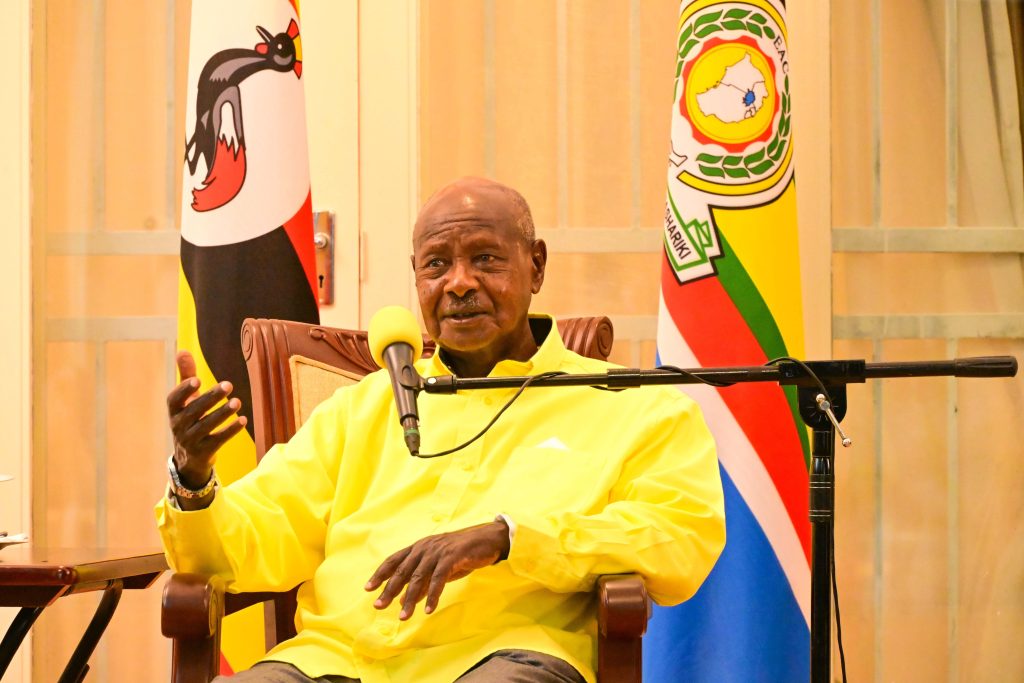
President Yoweri Museveni’s declarations concerning electoral irregularities in Uganda have taken a dramatic turn. He has accused the opposition of “infiltrating” to the tune of 2.7 million votes in the last general elections.
In this way, he tries to defend the use of a controversial new biometric voter verification system in the ongoing 2026 elections. His statements that were made public after the ballots were already cast in an election where heavy security measures and digital restrictions were in place, have brought in more controversy in the already chaotic electoral environment.
During his Thursday morning coffee with journalists and supporters, outside of his polling station located in the Kiruhura District, Museveni maintained that the contested ballots of the 2021 elections were not an indication of the legitimate opposition support but were irregular additions to the tally.
He spoke of the alleged infiltration as an indication of the election system’s weaknesses, which necessitated the compulsory biometric verification of voters for the current election.
“So still, like in the last election, the opposition infiltrated 2.7 million votes,” Museveni said. “Those votes they claim were theirs were not.” He specifically cited alleged shipments of ballots from abroad and irregular printing, although he did not provide any independent evidence to support the numbers mentioned.
The president’s remarks coincide with the situation where election authorities have started to use biometric voter verification devices with the aim of linking individual registrations with fingerprints and facial recognition in order to avoid duplicate voting as well as other electoral misconduct, which they themselves had previously indicated.
The Electoral Commission has so far represented the technology as a bastion to ensure that each qualified voter is allowed only one ballot, and it is not the case that the whole election process is not being kept under the confidence of the public.
Critics, however, view Museveni’s fraud narrative with skepticism, arguing that it risks undermining trust and could be used to justify restrictive measures that disadvantage opposition candidates.
The introduction of biometric systems has already been disputed by some political figures who warn that technical failures and unequal infrastructure could disenfranchise voters, particularly in rural areas with unstable power and network coverage.
The election is unfolding under a government-ordered internet blackout and widespread security deployments, measures official sources say are intended to curb misinformation but which opponents describe as tools to suppress transparency.
International observers are closely monitoring developments as Uganda navigates one of its most contentious electoral cycles in decades.
Museveni is seeking a seventh term in office, and his allegations of past ballot manipulation are shaping a broader narrative that touches on national legitimacy, technological reform, and the fractious future of Uganda’s democratic institutions.









Leave a Reply