


In a shocking evaluation that has the potential to redraw the political landscape of Kenya in the run-up to the 2027 general elections, Makueni Senator Dan Maanzo has loudly proclaimed the United Democratic Alliance (UDA) to be a party that is practically dead as a lone political entity and has gone further to say that the unity of the Orange Democratic Movement (ODM) is the only thing that can keep the party on the map.
This assertion ignited a flurry of discussions not only in the ruling party but also in the opposition camp, bringing to the fore the question of UDA’s unity and power play in elections in the future.
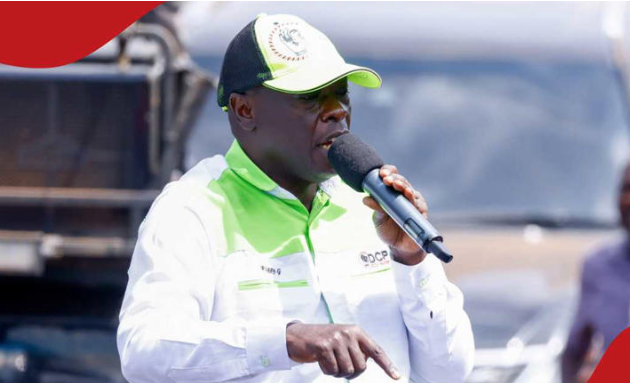
In a press briefing on January 15, 2026, Maanzo depicted UDA’s downfall as the most clearly visible in its historic bastion of Mount Kenya, where the recent rise of the Democracy for Citizens Party (DCP) — headed by the ex-Deputy President Riaghi Gachagua — has drained a considerable amount of the support that would have gone to UDA.
Maanzo stated that this move has not only impoverished UDA but also compelled the party to take-up, even more, the alliance with ODM in order to have the numbers to be counted in the fight for the presidency as well as the parliamentary seats.
“UDA is done for,” was the statement coming from Maanzo. “If UDA is to last, then it is UDA that requires ODM — and not the other way around.” His remarks highlight the viewpoint that the penetration of ODM into the grassroots and its overall national presence have now surpassed UDA’s power beyond its traditional strongholds.
Maanzo pointed to the recent actions taken by the top leadership of UDA and ODM as the basis for the interpretation of the political situation that they are already entering into formal bargaining for the coalition for the elections in 2027, giving as an example the official mandates from UDA’s National Executive Committee and ODM’s Central Management Committee as signs of growing mutual reliance.
Political analysts claim that Maanzo’s statement shows UDA’s internal anxiety about the party’s loss of influence and the necessity to create a strong pre-election pact that could resist challengers from the opposition.
The critics of the partnership argue on one hand that the UDA’s support on the ODM party will most probably result in losing its distinctiveness and on the other hand, it will be giving political power to a partner that has been UDA’s major rival in the past.
The debate already going on will be further fuelled by coalition negotiations with major questions about leadership posts, candidate selections and whether this marriage could survive under the burden of clashing regional interests and personalities that are likely to emerge in Kenya’s crucial electoral battle.







Leave a Reply