

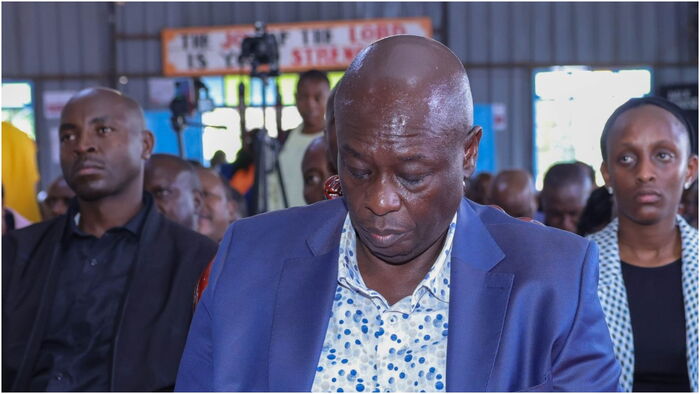
Kenya’s National Cohesion and Integration Commission (NCIC) has taken immediate action to clear the air regarding a rumor that has spread far and wide that it had invited the former Deputy President Rigathi Gachagua to explain himself over alleged tribal and divisive remarks, which they called unauthorized and fraudulent.
The commission’s clarification comes at a time when there is a lot of public discussion around alleged hate speech and political disinformation that is going viral.
The fake press release was released on Thursday, and it claimed NCIC had formally taken action against Gachagua for remarks breaching the National Cohesion and Integration Act—legislation that prohibits hate speech and discrimination based on ethnicity.
The official NCIC statement, which was issued on the same day, strongly rejected the document and reiterated that no summons, notices, or legal processes involving Gachagua have been initiated by the commission.
This denial is a reaction to a petition from Eldas MP Adan Keynan, who earlier in the week urged NCIC to investigate the deputy president’s remarks regarding a major Eastleigh business complex being linked to alleged proceeds of a foreign fraud scheme.
Keynan accused Gachagua of making “inflammatory and unfounded statements” that might disrupt national unity and also harm legitimate businesses, thus calling for the commission’s intervention.
The clarification issued by NCIC points out the institution’s worry about the distribution of false information in the highly charged political environment of Kenya, particularly when the country is getting closer and closer to the 2027 elections.
The commission explicitly did not say that it would not review, but it did not go as far as mentioning any hate speech or ethnic incitement cases or any current investigations or legal actions related to those issues.
The situation has brought to the fore a large scale of viral disinformation and politically sensitive interpretations of public statements.
Using the circulation of fake official documents as an example, the analysts assert that it will be a hard blow to the public’s trust in constitutional bodies and might even aggravate the already intense political rivalry by causing public unrest.
Political actors and media outlets are now under heightened scrutiny and hence required to verify claims before they start to amplify them. Critics argue that this is an important part of the process of keeping civic order and that it helps in preventing the misinformation from having any impact on the public opinion or legal processes.
As the debate continues, NCIC’s clarification may well be one of the factors that prompt the call for even stronger measures to be put in place against the spread of fake political communications.







Leave a Reply