

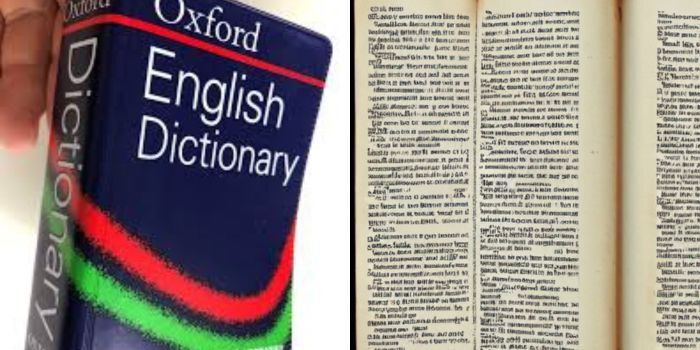
The Oxford English Dictionary (OED) has given a stunning and far-reaching update that has shaken the English-speaking world to its core. It has officially added a huge number of words and phrases of African origin to its vocabulary, which is a completely unprecedented change in the way global English is defined and documented.
The inclusion of these terms through the OED’s 2025 revamp is now reflected in its 2026 edition, which means that for the first time, the North and West Africa-rooted words—as well as others—are “English” on paper.
The words that were pushed to the status of authoritative language reference include the slang terms that had so far been used informally online or in music and street conversations. Among the most important entries are those of “nyash,” “abeg,” “biko,” “mammy market,” “amala,” “moi moi,” “Afrobeats,” and the culturally loaded term “Ghana Must Go.” These terms reflect the African influence on the English language and cover the areas of communication, food, trade, music, and identity.
Oxford’s editorial team sources disclosed that the decision was made after extensive research into the use of the terms on social media, in literature, music, and everyday speech in many countries.
For instance, “abeg” is currently defined as an interjection or adverb that indicates surprise, disbelief, or urgency, while “nyash” means the human backside and is used in both pop culture and slang.
The reactions of language scholars and cultural commentators have been predominantly mixed, with some people celebrating the change while others still find it controversial. Supporters of the new policy claim that it is a great step forward, as it is the first time that the impact of African Englishes on the global linguistic landscape is recognized, thus eliminating the colonial hierarchies of language codification that have been in place for so long.
On the other hand, the critics are concerned that the inclusion of slang and region-specific terms in a dictionary that has always been regarded as a protector of “standard English” may cause a dilution of the latter concept.
One of the major changes made in the dictionary is the one that comes with the acceptance of words from other global English varieties, together with the addition of over 500 new words and senses (“meanings”) in general, plus the revision of more than a thousand older entries, marking the quick change in the global use of English in the coming years.
The enlargement of the OED’s collection is a significant event in the history of English linguistics, as it recognizes the African linguistic heritage and indicates the coming of a wider revolution in the domain of English language authority, which experts predict will penetrate deep into the future of education, culture, and communication.









Leave a Reply