

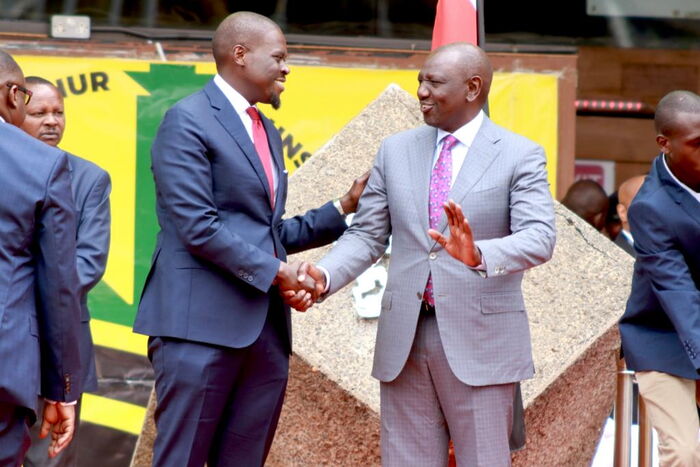
The high-stakes “backroom alchemy” between State House and City Hall has hit a terminal roadblock. What was intended to be a seamless transfer of power and revenue functions between President William Ruto and Governor Johnson Sakaja is now facing a catastrophic legal collapse. Legal experts and legislative hawks have sounded a definitive alarm: the deal is dead on arrival without a grueling gauntlet of public participation and a near-impossible Senate endorsement.
This is no longer a simple administrative shift; it is a full-blown constitutional crisis in the making. The “twisted” irony of this standoff is that the very laws designed to protect devolution are now being used as a tactical ambush against the architects of the deal. By attempting to bypass the Senate, the duo has inadvertently triggered a “sovereignty theft” narrative that is uniting critics across the political spectrum.
The urgency of this blockade cannot be overstated. Without the explicit “green light” from the Senate—a body traditionally protective of its oversight mandate—any transfer of Nairobi’s functions remains a legal ghost. Furthermore, the mandatory requirement for public participation means the residents of Nairobi effectively hold a collective veto over the President’s plans for the capital. If the people say no, the deal evaporates, leaving Governor Sakaja in a political vacuum.
As the Senate prepares to assert its authority, the Ruto-Sakaja pact looks less like a strategic alliance and more like a desperate gamble. The capital’s multi-billion-shilling revenue streams are at the center of this tug-of-war, and the judiciary is standing by to pull the trigger on any document signed behind closed doors. The message to the executive is chilling: in the heart of the city, a handshake is not a law, and the Senate will not be sidelined.












Leave a Reply