

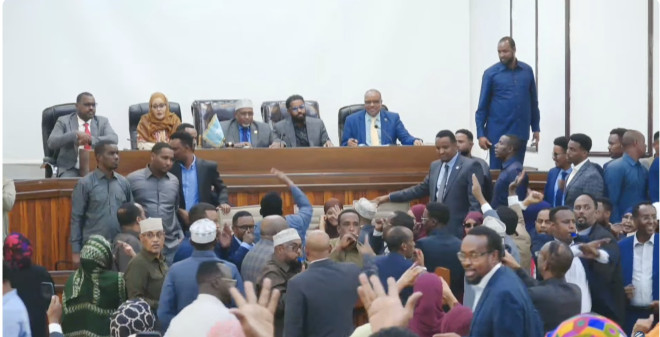
Somalia’s Federal Parliament experienced its first back-to-back disorderly session, which included physical fights between lawmakers, on January 28, 2026, because government and opposition lawmakers clashed about constitutional amendments that opponents said would increase presidential powers and change the country’s political system. The session, which had violent interruptions, finished without any legislative work because it created a political crisis that endangered the stability of the nation.
The disruption began when the House of People resumed its session, which was supposed to discuss major amendments to the Provisional Constitution. The chamber recording showed MPs trying to stop the session by shouting and standing on desks and blowing whistles while they disagreed about how to handle the amendment process.
Speaker Aden Mohamed Nur ‘Madobe’ lost control of the proceedings when opposition members interrupted his speech while accusing him and the government of trying to pass five constitutional amendments without proper discussion and political agreement. The proposed constitutional changes, which MPs opposed, would modify essential governance systems and enable President Hassan Sheikh Mohamud to extend his executive powers until the upcoming national elections.
The two opposing groups began fighting inside the chamber after their members began physical confrontations, which involved known political figures, including Senator Abdullahi Sheikh Ismail Fartaag and MP Hassan Firinbi. Madobe had to exit the room because of the disorder that resulted in him canceling the upcoming constitutional amendment joint debate session.
The opposition lawmaker Abdirahman Abdishakur, who leads his fight against the amendment plan, said that the Speaker blocked opposing voices while he pursued changes that did not have public backing and did not follow official procedures. He demonstrated that Parliament would end its operations during the upcoming months by stating that all major constitutional changes should not take place because they would violate democratic principles.
The confrontation demonstrates that Somalia’s legislature has deep internal rifts, which create barriers to efforts that attempt to change the indirect electoral system and implement universal suffrage. The chaotic session, which raised significant threats to Somalia’s transitional government’s stability, required political actors to begin their February talks, which would solve the current deadlock.









Leave a Reply