

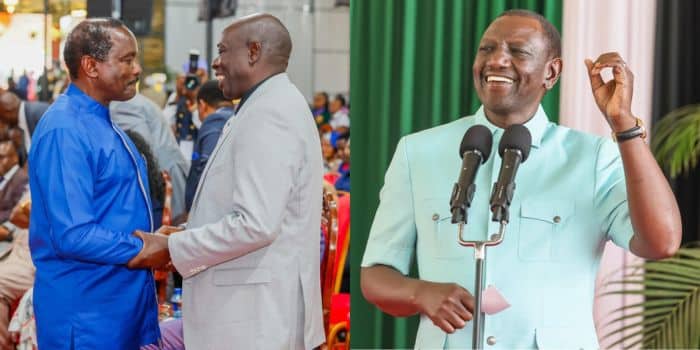
President William Ruto has sparked a new controversy in politics today; he issued a public call to the Unified Opposition to come up with an agenda that can compete with his government’s development record and plan.
This daring claim comes at a time of increasing confrontation regarding the 2027 general elections and has already hinted at one of the most aggressive clashes between government and opposition personalities this year.
Ruto speaking to the people at a West Pokot County interdenominational service accused opposition leaders of critiquing the government without suggesting anything and also asserted that their political communication does not contain a workable plan for the future of Kenya.
“Each and every leader must have a history of success, a blueprint and the means to explain the delivery of it,” said Ruto while at the same time projecting his Bottom-Up Economic Transformation Agenda and the national projects of his administration as evidence of the concrete successes of his government.
The President mentioned among other things: building of roads, power extension, and the cultivation of crops as the basis of his development plan.
He also associated the nation’s progress with peace, education, and the shared love for the country — these are the main traits of his leadership.The announcement made today was not just a case of political talk.
Ruto also used the moment to speak loudly to the people with illegal guns who should give up those guns to the authorities or to the church and at the same time the government is saying it will not allow criminals to have firearms.
In West Pokot, the President is looking at the new state of the Barpelo–Tot–Marich Pass road project which is probably the most expensive road project in the country.
Ruto stated that the project is a sign of the government’s commitment to making transportation easy and fostering trade between the different regions of the country and was therefore worth the billions of shillings being spent on it.
Political specialists see Ruto’s challenge as a clever electoral tactic shifting the public discussion from the opposition’s criticisms to the development-oriented narrative.
Moreover, the move puts even more pressure on the opposition leaders, especially concerning their capability to communicate counter-policies that would have a positive impact on the voters.







Leave a Reply