

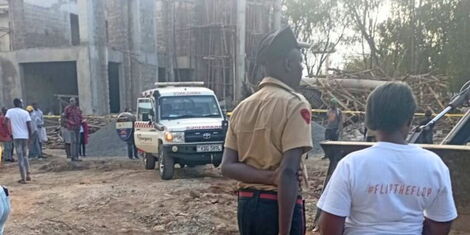
The capital of Kenya is sitting on a seismic time bomb, top engineers and building professionals announced this week, revealing that over 85% of the high-rise buildings in Nairobi might not be able to endure a moderate earthquake and eventually collapse catastrophically, thus endangering the lives of millions of people living there.
This shocking evaluation is closely related to the recent South C building collapse, which has highlighted the lack of regulatory supervision and structural safety in the entire city area.
The professional associations of engineers, architects, planners, surveyors, and construction managers have together alerted the public by referring to a detailed survey of approximately 15,000 buildings in which only 15% were declared safe for occupation structurally.
The rest were either totally unsafe or only weakly stable, as per the initial findings shared during an emergency press conference. “John Doe numbers,” the major speaking persons from the industry said. “In case of a seismic tremor of even low magnitude, most of the mentioned buildings will not stand.
The skyline of the city might literally fall on its people.” Their severe warnings portray a crisis much larger than just a few collapses, highlighting systemic failures in the areas of corruption, weak planning enforcement, use of poor-quality materials, and renting of credentials by unqualified people all over the construction approval chains.
The political and regulatory scrutiny that has been intense has been one of the consequences of the crisis after the South C collapse, where enforcement teams had flagged the site for multiple infractions months before it collapsed unexpectedly, killing and injuring workers and passersby.
Now, critics contend that the repeated alerts were ignored and that this was a clear indication of the deep failures in the oversight both at the county and national levels. The professionals from the industry are saying that Nairobi’s building stock needs an urgent, extensive audit done immediately, evacuation or reinforcement of high-risk structures, and total accountability for the officials and developers who approved unsafe construction.
They will have to take such decisive actions; otherwise, Nairobi will not only suffer from a construction safety crisis but also a potential urban earthquake disaster, which will be larger than the past tragedies.
The seriousness of these discoveries has resulted in public panic and demands for swift government action, as the residents of Nairobi are aware of the fact that many of the buildings they stay in and work in are probably not able to withstand seismic activity.












Leave a Reply