
 Wamuzi News Ke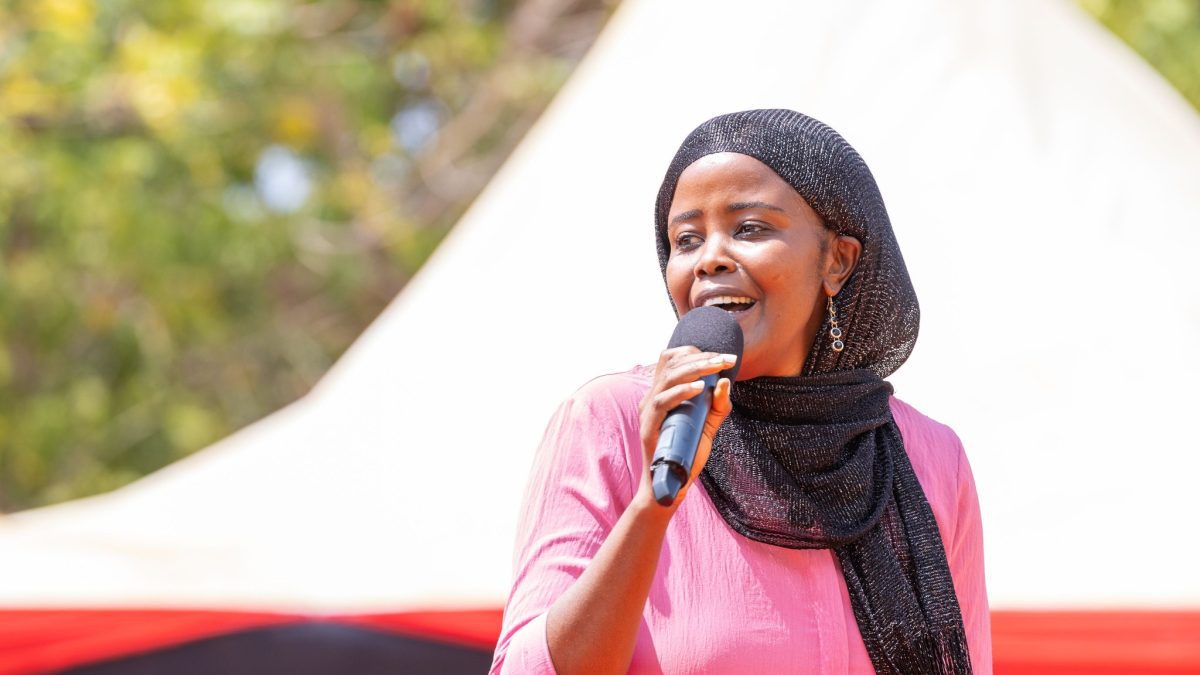
The story of an attempted sexual assault associated with her public support of President William Ruto’s re-election campaign has been bravely told by Lamu County Woman Representative Muthoni Marubu, thus stirring up the issue of political intolerance and the safety of elected officials even more.
Marubu, speaking publicly after a burial service in Murang’a County on Saturday, was the target of a very hostile crowd who erupted during her speech when she pledged allegiance to the Kenya Kwanza government.
Heckling soon turned to violence, and the security personnel had to intervene and escort her to safety. She later revealed that during the commotion, some people tried to scare her into silence, and one of them, she said, almost sexually assaulted her. This assertion has created a debate in Kenya’s politics that is very hard to dismiss.
Marubu, obviously disturbed in her remarks, not only condemned the incident as an attack on her personal dignity but also on the democratic principles.
Her story has received immediate and widespread condemnation from all over the political spectrum, with critics alerting that the event is a signal of a dangerous escalation in political rhetoric whereby the safety of public servants with different opinions has become the most threatened issue.
Opposition and civil society leaders have branded the reported attempt on her bodily autonomy as “beyond political disagreement” and demanded an urgent inquiry.
While some people witnessing the event argue that Marubu’s case denotes an increasing lack of tolerance in society, others point out that the alleged incident shows the existence of unresolved issues in gender-based violence and political coercion.
The legal minds suggest that the use of force or intimidation in any way related to the exercising of political rights not only violates the constitution but also may amount to criminal conduct.
Among the national personalities that have spoken out against the incident is the Minority Whip, Millie Odhiambo, who has directly accused the growing political animosity of being the cause of such clashes.
There is an upswing in the demand for police and parliamentary leadership to act, be accountable, and protect the rights and safety of lawmakers regardless of their political affiliation.
The seriousness of Marubu’s charges has exacerbated the public’s fear of political intolerance in Kenya, especially as the country is in an increasingly heated pre-election atmosphere.
An inquiry into this incident would likely lead to the re-examination of issues concerning not only the democratic rights of politicians but also their security.