

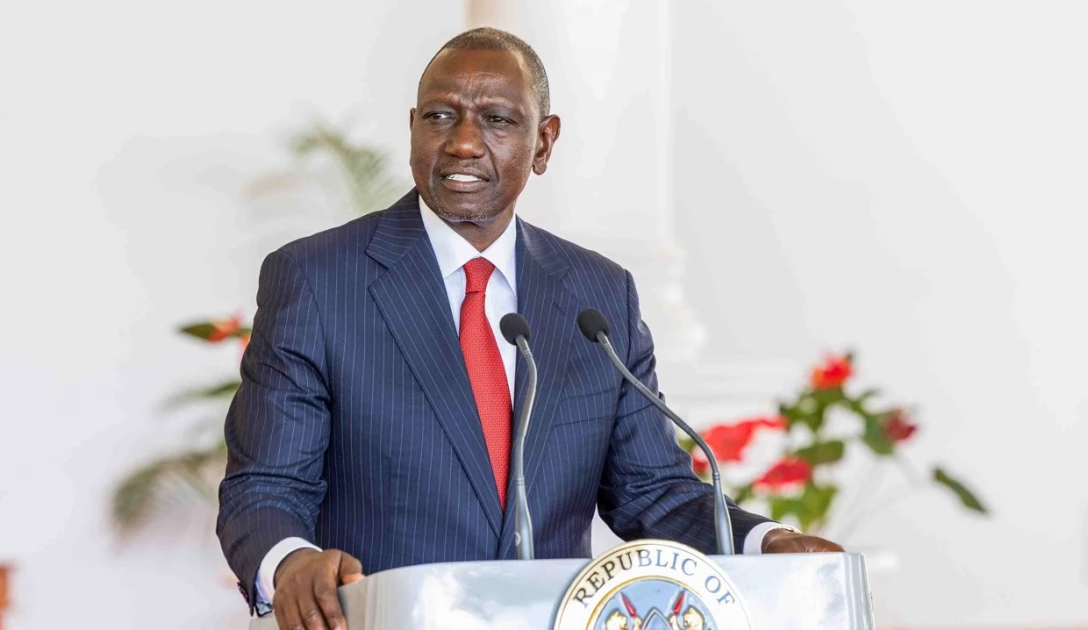
A legal battle of major proportions has opened at the High Court of Kenya, which may well slow down one of President William Ruto’s economic sectors that he had thought to be the most capable of yielding the greatest returns: the National Infrastructure Fund that has just been put forward.
An outspoken group of litigants, filing a very urgent petition, has, in fact, declared the fund unconstitutional, making power, i.e., the government, quake with fear and shake in anticipation of the ensuing court battle, the main argument being lack of transparency and possible violation of the Public Finance Management Act.
After the petition surfaced late Tuesday, it claimed that the proposed National Infrastructure Fund is a “legislative Trojan horse,” that is to say, a “hidden agenda” that will allow the government to dodge the much-hated, if not the least-liked, parliamentary scrutiny.
The government has given the fund a sales pitch like that of a magic wand to get rid of the country’s huge infrastructure deficit through the PPPs, while the petitioners argue that it is a fundamental flaw and a threat to the very existence of the National Treasury’s independence.
The sources that are trustworthy and close to the litigation are pointing towards an unexpected strategic move that has not yet been reported in the mainstream media. The petition goes directly to the fact that the fund will have the power to “ring-fence” the large amounts of tax revenues collected over the years for the specific long-term projects without the annual parliamentary review.
The petitioners say that this leads to the creation of an alternative budget that performs in what is termed to be a non-chartered manner and virtually out of the oversight of the Auditor General and the Controller of Budget.
Most importantly, the issue of concern that has been raised in the court documents is the claim that the fund could be a means to cover up the real amount of Kenya’s public debt. By taking the infrastructure financing route through an off-budget vessel, the government could be able in practice to take on billions in new liabilities that are not destined for the national debt ceiling tally.
Today legal professionals cautioned that in the absence of court intervention, the establishment could result in a “hidden debt crisis,” which would be mirrored in the cases of other emerging markets that depended on non-transparent infrastructure vehicles.
Moreover, the petitioners accuse the government of hastening the end of the fund without the required public participation that is enshrined in the 2010 Constitution. They assert that the regulations establishing the fund’s administration and the choice of the private partners are “very unclear” and thus permit corruption and misspending of public money masked as national development.
Should the High Court accept the injunction application for stoppage of the fund’s activities, then several road and energy projects worth billions of shillings that are already in the pipeline may be put on hold for an indefinite period of time.
This will be a heavy setback to the government’s “bottom-up” economic policy since infrastructure development will be key to the stimulation of job creation.
Official government spokesmen have not yet come out with any formal rebuttals, but high-ranking officials from the Ministry of Transport and Infrastructure have already convinced the public that the fund is a critical tool to support modernization through the fund. They claim that the old way of borrowing is turning out to be unsustainable and that the fund will be the only means of luring foreign direct investment to the country’s transport routes.
The matter is likely to be acknowledged by the High Court as urgent within the next two days. Legal experts think that the case has a chance to go to the Supreme Court since it is related to the fundamental power struggle between the Executive’s right to implement policy and the Judiciary’s duty to protect the public funds. The National Infrastructure Fund is still in legal limbo, as well as the whole project of Kenya’s development.
The judiciary thus becomes the focal point, as everyone is waiting to see whether they would regard the petitioners’ claim of “executive overreach in the financial sector” as a reason for their intervention. This case is not only about who gets what in terms of infrastructure; it is also about the extent to which the Government of Kenya is accountable for its financial dealings.











Leave a Reply