

The proposed changes to the law have been a real bombshell to the already fragile relations between the two sectors, signaling the murder of the traditional role the state has been playing in the transmission of books instead of conceding to the very mildest of penalties for what was historically treated as a mere administrative process.
The publishers in Kenya have to do this, according to the existing law, by sending the required number of copies of their new works to the Registrar of Books and Newspapers and the Kenya National Library Service.
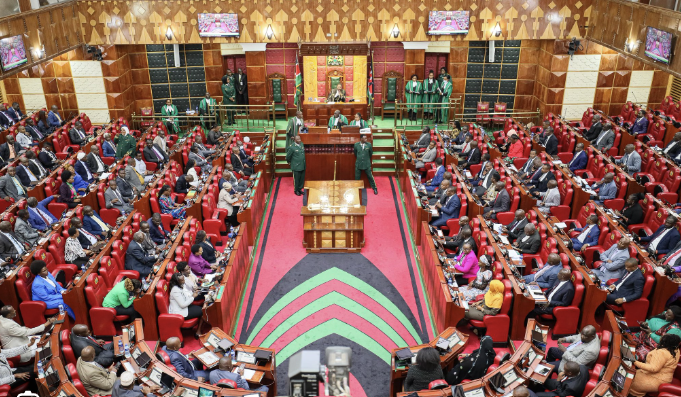
The recent Parliamentary Broadcasting and Library Committee-sanctioned amendment, however, promotes the Clerk of the Senate to a chief storing place, ordering that publishers bear the cost of sending three copies of each new book to the Parliament.
The penalty provisions of the bill are the ones that drag, if not scare, the most. The case of a “bureaucratic oversight,” due to which a self-published author or a small press may inadvertently commit a felony, is, indeed, a first.
If the law goes into effect, it implies that an offender, who is sentenced for the first time, would have in front of him or her a choice of either paying a huge fine of up to Sh1 million or being imprisoned for a maximum of three years for not delivering the manuscript within a month.
The situation is even more severe in the case of repeating offenders: they could be sentenced to up to five years in jail and have their names permanently blacklisted from the writing profession.
Legal experts have stated that this effectively creates a “prison clock” for every writer in the country regardless of the type of book created; it may range from textbooks with high academic stakes to small poetry chapbooks.
The government claims that the bill is an imitation of the international standards observed in South Africa and South Korea, which together create a “national heritage mirror.”
However, there is a twist insiders have pointed out that has not been discussed so far. The bill very clearly says that only digital formats can be used for the delivery of works. In contrast to physical books, the deposits of digital copies give the state the unprecedented power of control over the raw intellectual property of the creators.
Copyright lawyers are making the case that without explicit measures to determine the condition of these digital assets, the bill might just set up a state-run library of digital works that would render the commercial value of Kenyan authors very low.
“We are practically being asked to support the government’s research library with our private stocks while resting under the threat of prison,” a well-known publisher from Nairobi said during the industry’s recent forum.
By the leaders of the industry, the bill’s timing has been characterized as “insensitive.”
At this very moment, the Kenyan publishing industry is dealing with a huge government debt that is believed to be more than Sh11 billion—the amount owed for the supply of materials under the Grade 9 and Grade 10 competency-based curriculum (CBC) that the government has provided.
The compulsion of publishers to take up the cost of “legal deposits” for Parliament that involves additional logistics and printing while they are still waiting for a long period of back pay is seen as a “double tax” on knowledge.
Critics are of the opinion that instead of developing a “Singaporean” standard of intellectual archiving, the government is driving the industry into a punitive environment that would force smaller, independent voices to remain underground to avoid legal exposure.











Leave a Reply