

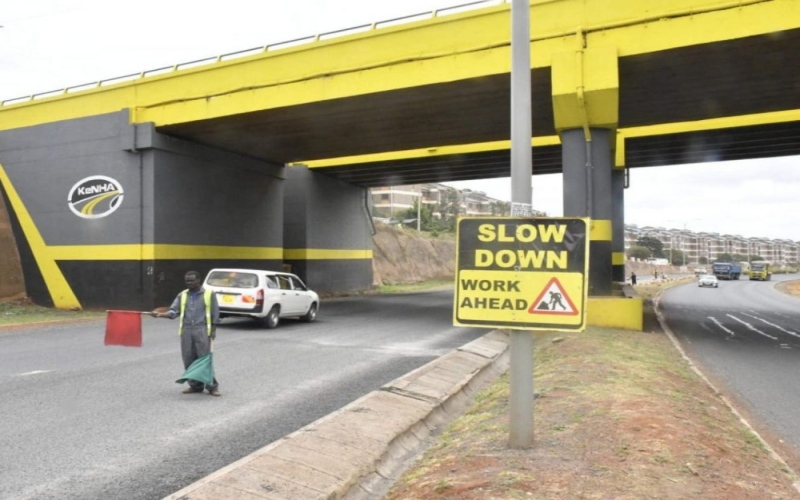
In a chilling escalation of the ongoing meteorological crisis, the Kenya National Highways Authority (KeNHA) has officially declared a critical section of the Eldama Ravine–Maji Mazuri–Molo road a “no-go zone,” warning that the structural integrity of the artery has been compromised by a violent surge in water levels.
In a directive issued by KeNHA Director General Luka Kimeli, the authority confirmed that torrential downpours in upstream catchment areas have triggered a catastrophic hydraulic rise, effectively swallowing the tarmac.
The “twisted” reality for commuters in the Rift Valley is that this is no longer a mere drainage issue; it is a total geographic reclamation. The road, a vital link for commerce and transport, has transitioned from a public utility to a high-risk drowning hazard in less than 24 hours.
The emergency notice has effectively severed the direct link between Eldama Ravine and Molo, forcing a desperate rerouting of all traffic. KeNHA has ordered motorists to utilize the Eldama Ravine–Mogotio–Salgaa–Nakuru circuit or the Kabarnet–Marigat–Mogotio route. For those approaching from Nakuru, the only viable safety valve is the Salgaa–Ravine bypass.
However, with the National Police Service reporting a nationwide flood death toll of 77, these alternative routes are already facing extreme congestion and the looming threat of further washouts.
This closure is part of a broader “infrastructure collapse” sweeping the nation. From the submerged Kipsonoi River Bridge in Bomet to the silt-buried Maai Mahiu–Suswa highway, Kenya’s transit spine is in intensive care.
KeNHA has warned that any attempt to “test the waters” will result in immediate vehicle loss or fatality. As the Meteorological Department predicts a rainfall peak between March 20 and 23, the Eldama Ravine corridor remains a ghost road, patrolled by traffic marshals tasked with preventing motorists from driving into an aquatic abyss.












Leave a Reply