

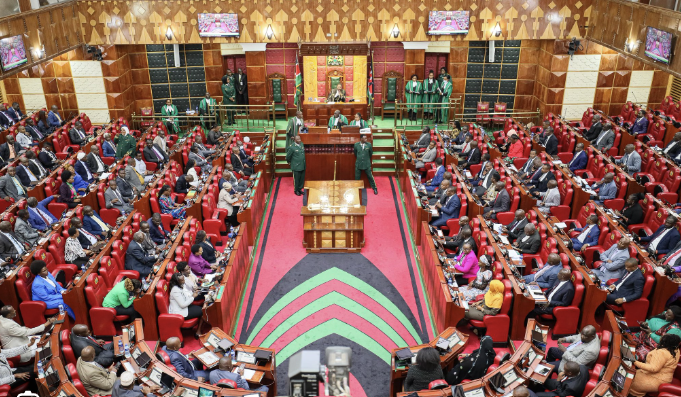
In a dramatic constitutional crisis, the National Assembly has urgently asked the High Court through court papers to invalidate a petition contesting the proposed National Infrastructure Fund, stating that the legal challenge is premature, conjectural, and interference with the mandate of the legislature. The action escalates a high-stakes conflict regarding the destiny of one of Kenya’s most daring public finance projects.
A replying affidavit made by Deputy Clerk of the National Assembly Jeremiah Ndombi states that the House claims that the petitioners quickly took their case to the courts ignoring the fact that the Government’s approval in December 2025 was just a first step and that the fund is still under the control of the Parliament with all the necessary oversight, public input, and complete legislative process.
The legal representatives of the Assembly argue that cabinet authorization for the formation of the fund as a limited liability corporation does not entail that it has been fully created or put into operation—a procedure that must, according to the Constitution, be accompanied by thorough legislative processes that cannot be preceded by the courts through intervention.
“We will, with due respect, petition for the dismissal of the case on the grounds that it is premature, conjectural, and an abuse of the constitutional processes,” Ndombi stated in the verified affidavit, emphasizing the Parliament’s position that the judicial review at this time would interfere with the principle of separation of powers and legislative authority.
The petition at hand was presented by some Kenyan individuals who claim that the setting up of the fund without total legislative approval is a violation of constitutional guarantees on public finance, transparency, accountability, and meaningful public participation. These issues are the core of the last legal dispute over the fund’s legality.
Previously, the High Court issued orders that temporarily stopped the implementation of the National Infrastructure Fund until the full hearings regarding its legality were held. The concerns centered on the fact that the fund might have been established via a State House communiqué instead of an Act of Parliament, and consequently, trillions of shillings could have been placed outside the normal legislative and audit oversight.
By dismissing the petition as “premature,” the National Assembly is indicating a strategic legal defense of the government’s flagship infrastructure financing model which, if ultimately upheld, could even reshape the economic agenda of Kenya. The next court hearing will likely be on the question of whether or not the judiciary will allow the case to proceed while the legislature is still going through the approval process.









Leave a Reply