

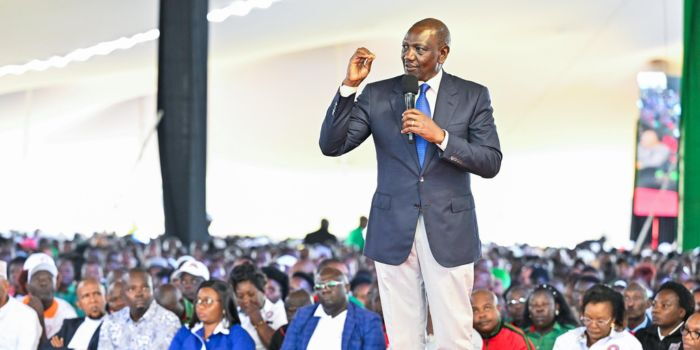
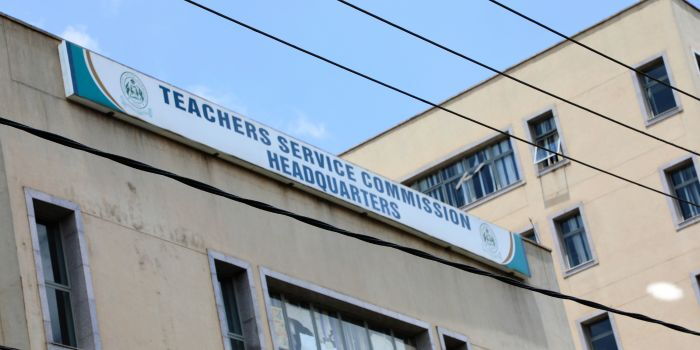
The education sector in Kenya is faced with the threat of a complete shutdown after the Kenya Union of Post-Primary Education Teachers (KUPPET) put an alarming deadline to the Teachers Service Commission (TSC).
The union has warned of a large-scale industrial action if the government does not soon have the salary review agreement worth Sh33.7 billion, promised by President William Ruto, enforced.
The disagreement is primarily caused by the Collective Bargaining Agreement (CBA) between 2025 and 2029, which was signed earlier this year and aimed at the salary disparities in the public sector.
Although the agreement was celebrated as a landmark victory—granting up to 29.5 percent raises for the lowest-paid teachers—KUPPET leaders now accuse the management of “systemic betrayal.”
In a surprising act that has shocked the teaching community, KUPPET Secretary General Akello Misori disclosed that although the agreement is legal, at least three thousand teachers have not yet received the salary increase reflected on their pay slips.
The union pointed directly to the Sh13.3 billion second-phase rollout of the previous cycle and the immediate release of the new financial year increments for 2025/2026 as the culprits.
“We have stopped negotiating and are now demanding our rights that are legally and morally ours. The contract signed by the president is not an option—it is a mandate,” a senior KUPPET official said during a conflict-laden press conference in Nairobi.
The Teachers Service Commission (TSC) has reportedly pointed to “budgetary constraints” resulting from the National Treasury’s sharp cuts in its recurrent expenditure.
According to insiders, a Sh10.2 billion gap in the TSC budget has incapacitated the commission from meeting the salary commitments. This fiscal stalemate has put teachers into a dubious condition, as they are experiencing the highest inflation rates in ten years without the promised “economic cushion.”
KUPPET argues that the government has found money in billions for “pet projects” like the National Infrastructure Fund while the professionals who support the nation’s future have been neglected. The union has rejected these justifications.
In case the strike occurs, it will completely hinder the functioning of secondary schools and JSS in every part of the country. More than 400,000 educators will stop working, which would result in the attendance of millions of learners being canceled and the national exam schedule being disturbed.
To President Ruto, a teachers’ strike would be majorly damaging to the “broad-based government” stability narrative.
The health sector is already experiencing a lot of changes due to the SHA transition, and if the education sector also suffers, it could easily provoke a larger civil unrest.






Leave a Reply