

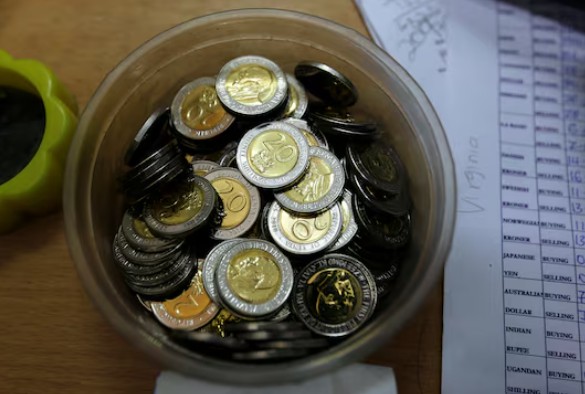
In a remarkable and unprecedented move, the Central Bank of Kenya (CBK) has announced the immediate and large-scale disposal of about 281 tonnes of old and damaged coins, which will be a huge step towards clearing the worn currency and bringing new minting.
The decision to wipe out the coins that are no longer in circulation, one of the biggest of its kind in recent history, is likely to cause a radical change in the operations of cash management in Kenya.
Through this week’s public tender, CBK is looking for qualified industrial buyers and metal smelting companies who can buy and melt down the old coins, which have become unserviceable and can no longer be used because of wear, mutilation, or corrosion.
The bulk of the coins will be stored in CBK facilities in Mombasa, Nairobi, and Kisumu, where they will be destroyed under strict supervision, and the bank will require the bidders to commit to certified smelting witnessed by CBK officials.
The enormous 281,667 kilograms of obsolete coins consist of different denominations that have lost their purpose as their use is being replaced with the rise of digital payments and the declining demand for currency of low denominations.
While the central bank representatives have not revealed the exact number of individual coins that are included, the tender notice states that the disposal encompasses an exceptionally large stockpile built up over a long period of currency circulation.
As of June 2025, the central bank had already reported that it was in possession of coins worth Sh11.37 billion, which is a fairly huge reserve reflecting not only the older issues but also the need to constantly supply the market with fresh coins physically.
Out of the whole amount, Sh20 coins contributed Sh4 billion, Sh10 coins contributed Sh4.02 billion, and Sh5 coins contributed Sh1.95 billion to the total, which means that the large denominations are likely to be the ones that will be most affected by the destruction of the old coins.
The Central Bank of Kenya (CBK) has associated the disposal of these coins with the major currency renewal programs, which also embrace the recent minting tenders for new coins and the constant upgrading of the quality of physical money.
The bank’s move is taking place against the background of changing payment habits in Kenya, where the use of mobile and electronic transactions has gradually diminished the demand for coins in circulation, especially for low-value transactions.
Contractors who would like to melt coins have to provide proof of having large-scale industrial capability and experience in dealing with the melting of metal in very large quantities.
The tender submission deadline is at the end of January 2026, and CBK representatives have been stressing that the entire disposal activity will be clear-cut and subject to close supervision.







Leave a Reply