

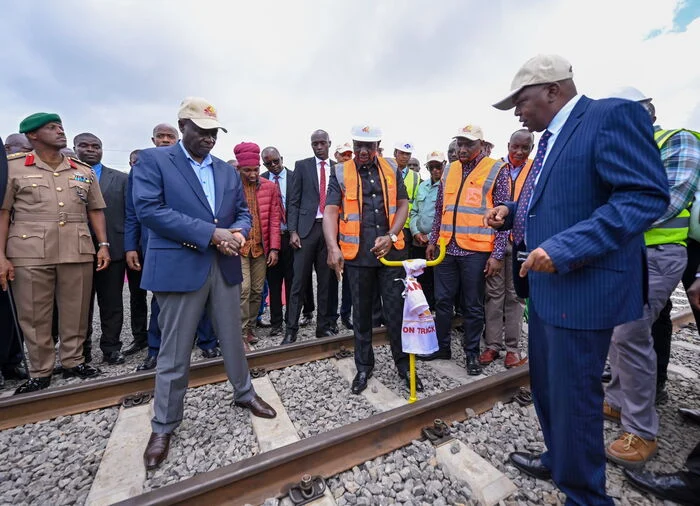
The dramatic legal move, which pretty much upended Kenya’s whole infrastructure project, saw the High Court issuing a temporary suspension for the construction of the Sh11 billion Riruta–Lenana–Ngong commuter rail line, with the issuing of an urgent interim order that imposed a freeze not only on the actual work but also on the financial disbursements related to the project.
The court ruling, which was made on January 20, 2026, upset government officials and the transport sector, and above all, it raised a lot of very serious questions about the whole process and compliance and accountability, in particular, of the major public works.
The ruling came as a consequence of a constitutional petition lodged by Busia Senator Okiya Omtatah and two other petitioners who contested the legality of the commuter rail project and the funding method.
In his petition, Omtatah contended that the government failed to acquire vital parliamentary approval, did not engage the public in a meaningful way, and did not allow the project to go through transparent scrutiny before it was authorized and the funds were allocated from the Railway Development Levy Fund (RDLF) and the Consolidated Fund for the 12.5-kilometer railway.
Justice Bahati Mwamuye concurred that the respondents—among which were the Kenya Railways Corporation and other governmental bodies—did not observe the court order to submit their responses by the deadline of December 30, 2025.
The judge, in his ruling, explained that the government’s noncompliance with court schedules and failure to fulfill its legal obligations gave justification for the conservatory orders to prevent the construction and to stop all further expenditures until the case is completely heard.
The court’s temporary order stopped all physical work on the commuter rail project right away. The project had been branded by the government of President William Ruto as a major initiative under the newly introduced Bottom-Up Economic Transformation Agenda (BETA), which was aimed at relieving Nairobi of its heavy traffic and giving more options for mass transit.
The project had already advanced to building stages and was expected to improve urban mobility and connect the outskirts of Nairobi, which are becoming more developed.
An attorney for the government told the judge that they were not ready to argue the case, as there was a different conservatory order in Nakuru at that time that limited the use of private law firms, which made it more difficult for them to respond legally. The plaintiffs did not accept this reasoning and claimed that in-house lawyers would have been able to respond within the required time frames.
The ruling with such high stakes has now cast a legal doubt over the most ambitious commuter rail project of Kenya, which could even lead to changes in the infrastructure planning and budget control before the 2027 general election. There will be more hearings to come that will examine issues including constitutional compliance, standards of public participation, and the fate of urban rail investment in Nairobi.










Leave a Reply