

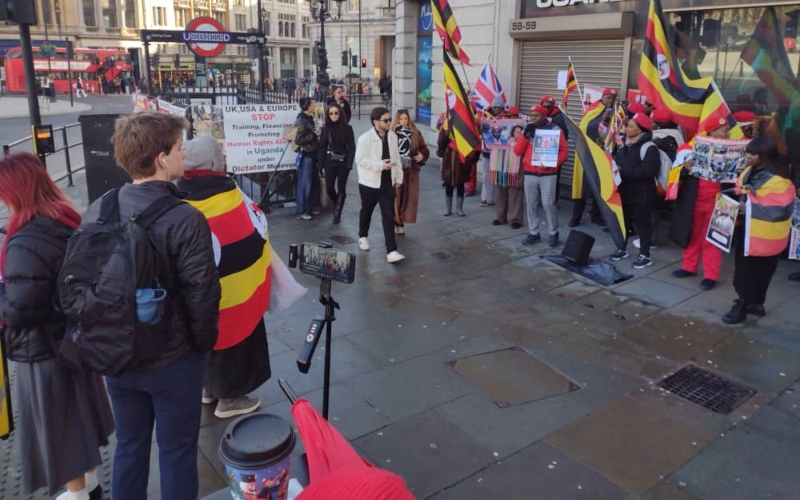
A large number of Ugandans who are residing and working in the United Kingdom came together at the Ugandan High Commission in London on Friday evening, holding a powerful protest against what they termed gross violations of human rights and democratic practices during Uganda’s recent presidential election.
The noises made by the protesters and their means of expression through placards and shouting for an investigation by the International Criminal Court indicate a growing concern and anger among the international community regarding the way the electoral process and the subsequent unrest were managed by Kampala.
The protesters coming from various parts of the UK accused the regime of Yoweri Museveni of massive electoral fraud and bloodshed for the opposition, the human rights, and ordinary voters. The organizers of the demonstration stated in front of the press that the Ugandan government is responsible for the escalating violence, reported kidnappings, and curtailing of free speech.
The protest, as per the accounts of the participants, reached its peak when the protestors were outside the Ugandan Embassy at Trafalgar Square. They were holding signs that condemned what they termed “state-sanctioned atrocities” and were calling upon the international community to act promptly.
The speakers invited the UK, the EU, and the US to back an ICC investigation into crimes against humanity during the elections, which include unlawful deaths, forced disappearances, and suppression of political dissent.
The protests are getting higher up the list of demands from the people to the government at a time when the political situation in Uganda is already being watched very closely.
The National Unity Platform, the main opposition party, and others have blamed security forces for resorting to violence and have cast doubt on the provisional election results, which gave Museveni a huge lead, quoting the security forces’ actions as reasons for their doubts. Internet shutdowns and limited media coverage have been pointed out by the opposition as the major factors that played a role in the lack of transparency in the election process.
The protest in London was a way of demonstrating that the Ugandan diaspora would increase their advocacy if there was no response from the international community. “We will not be silent witnesses when people suffer human rights abuses in their own country,” was the message from the spokesperson of the protesters.
They promised more protests and diplomatic actions that will be directed at drawing the attention of the world and the setting up of accountability structures.
The Ugandan High Commission has so far not reacted to the protests, nor to the requests for an ICC inquiry. While the call for justice from abroad keeps getting louder, observers are cautioning that the Ugandan government will have to deal with even more diplomatic challenges and a possible legal examination regarding its election practices and treatment of dissenters.




Leave a Reply