

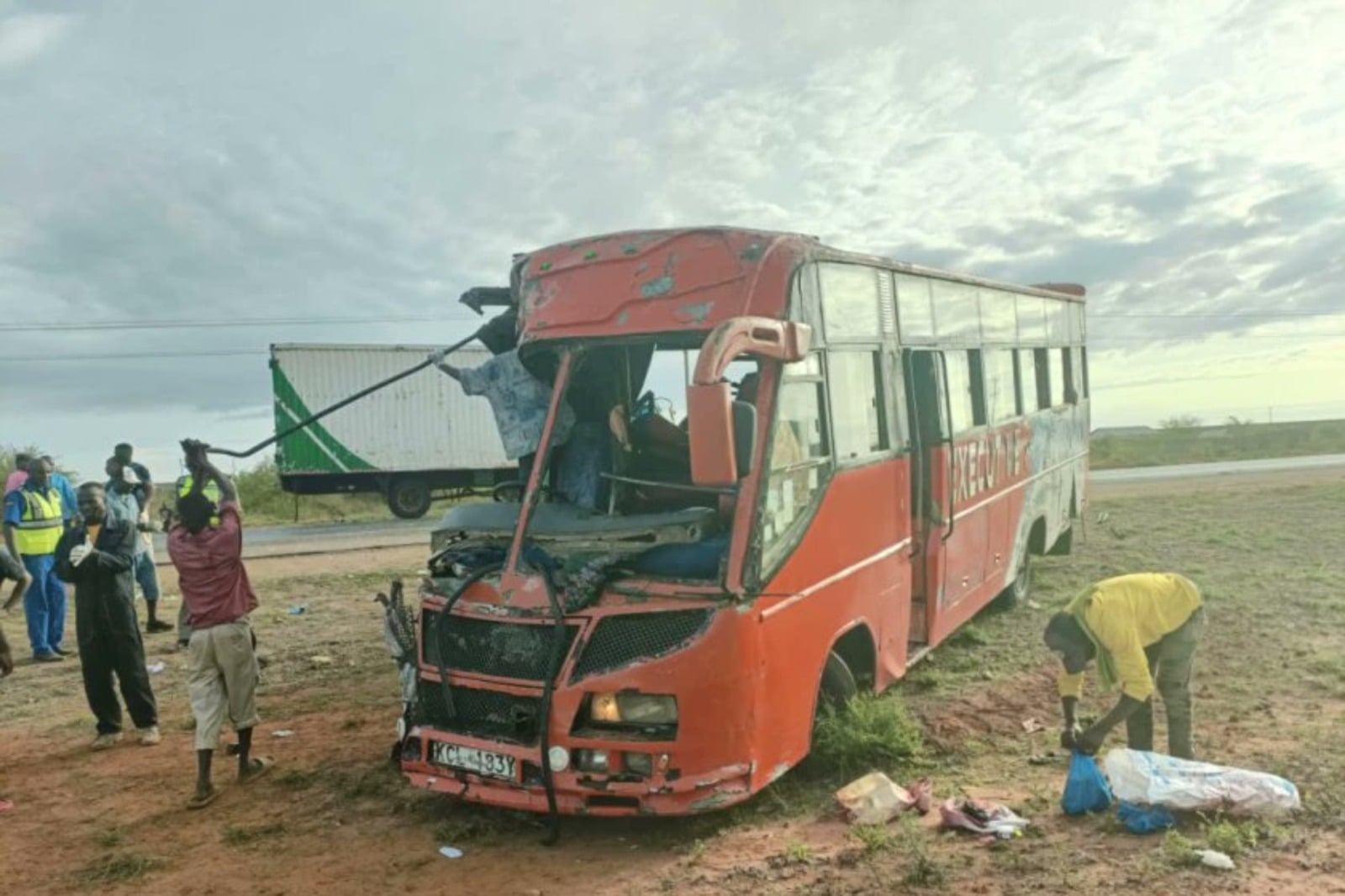
The Nairobi-Mombasa highway functions as the main economic artery, which connects Kenya’s port with its inland regions but now serves as a fast-moving death research site. The transport industry experienced a devastating disruption when a high-capacity bus and a heavy-duty trailer collided head-on, resulting in the deaths of six passengers.
The impact physics produced by the collision between the mass-transit vessel and freight behemoth created a bus that suffered destruction to its entire body, which left only broken steel and glass debris. While authorities attempt to explain the situation through “human error” or “mechanical failure,” actual conditions reveal that drivers must navigate through a highway that offers them no chance for mistakes.
The “twisted” reality of this latest carnage lies in the economic irony of the route. The government uses its cargo operations to preserve national economic activity, but this decision incurs human costs, which result in violent deaths. This road section, which lacks dual-carriageway protection, has transformed into a dangerous street where drivers face life-threatening risks at any time.
Emergency responders found the scene covered with mechanical debris and personal belongings that belonged to six citizens who died at an asphalt trap during their final moments. The trailer driver survived the crash, but the bus passengers who occupied the impact zone faced instant death from the freight truck’s moving force.








Leave a Reply