

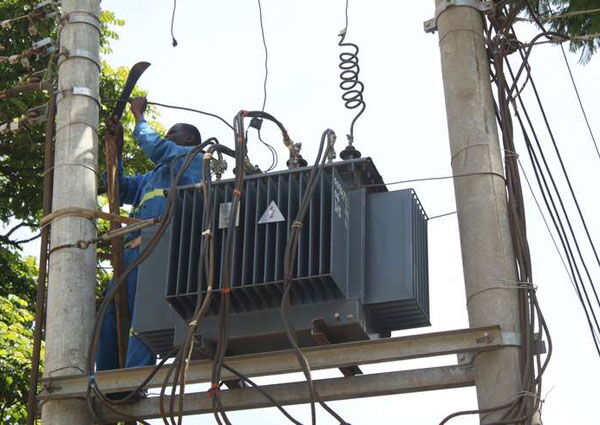
In a shocking revelation, a government audit has uncovered the extensive lack of ability of Kenya Power to supply electricity to a good number of Kenyans who have already paid huge sums of money for this, which again points to the national utility’s poor performance and thus calls for accountability and reform.
The Auditor-General’s report, which is a part of the public sector performance audit for the year ending on June 30, 2025, indicates that there are still tens of thousands of electricity connection projects that are either stalled or have not even been started at all, all this while customers have been paying their bills.
Auditor-General Nancy Gathungu says that Kenya Power got Sh12.724 billion from customers in capital contributions for connection projects that had not even started or were very much delayed. Out of the total number of projects, 12,995 worth Sh1.24 billion have not even started, while 3,593 projects worth Sh1.9 billion are behind schedule, thus leaving the affected families and businesses without electricity for a long time after they have already paid.
This situation is a complete contradiction of Kenya Power’s very own customer charter, which states that the company must finish new connections within 7 to 28 days of the payment. The audit further indicates that some customers have been waiting for years, while some projects have been recorded as unimplemented for as long as 29 years, which is an effective denial of basic electricity access and, at the same time, a blow to public confidence in service delivery.
Kenya Power management cited among the reasons for the delays issues related to wayleave, materials, and customer-initiated refunds or site transfers, yet auditors considered these as just weak justification for the scale of no movement.
According to the report, 7,740 projects with a total capital of Sh877.8 million were not even started, while 5,255 projects worth Sh366.7 million remained inactive for between one and six years, as of June 2025.
Analysts and consumer advocates have the opinion that the audit actually reveals a deep-rooted mismanagement problem in the company and that it is an indication of the necessity for stronger governance and oversight mechanisms in the electricity sector.
They also add that the prolonged connection delays not only result in customers being deprived of a necessary service but also deny Kenya Power its revenue while causing a decrease in the public trust in the government’s electrification initiatives.
The audit report is likely to provoke the legislators’ energy committee, consumer rights advocates, and civil society to scrutinize the matter more intensively, demanding that the power connection fees, which cost millions of shillings, result in actual power supply by way of concrete corrective actions.
The government has not provided a detailed response to the audit yet; however, regulators and Kenya Power are under increasing pressure to come up with immediate solutions and thereby restore the public’s faith in the electricity distribution system of the country.







Leave a Reply