

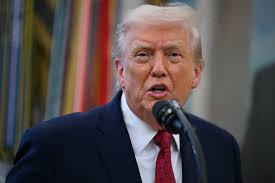
In a sharply divided vote that has thrust U.S. election laws into national turmoil, the Trump-backed SAVE America Act was approved by the U.S. House of Representatives in a 218-213 party-line decision Wednesday, intensifying a fierce battle over voting rights and federal election oversight. The legislation now advances to the Senate, where its fate remains deeply uncertain amid legal and political resistance.
The SAVE America Act, championed by former President Donald Trump and prominent Republican lawmakers, imposes stringent new federal requirements on voter registration and voting procedures. Key provisions include a national requirement for documentary proof of U.S. citizenship when registering to vote and a government-issued photo identification mandate at federal polling stations—including mail ballots. Supporters argue these measures are essential to safeguard electoral integrity and public confidence in elections.
Only one Democrat in the House, Representative Henry Cuellar of Texas, joined Republicans in supporting the bill, underscoring the stark partisan divide over election policy. GOP leaders framed the act as a response to concerns about election fraud, despite a lack of evidence showing widespread irregularities.
Opponents, including Democratic leaders and voting rights advocates, have condemned the measure as a dangerous assault on voter access, arguing it would disenfranchise millions of eligible citizens—particularly low-income, minority, and elderly voters who may not possess the necessary documentation like passports or birth certificates.
Civil liberties organizations and national civil rights groups have raised alarms about the potential impact on voter participation, stating such barriers could suppress turnout ahead of the 2026 midterm elections.
The bill’s passage sets the stage for an intense showdown in the Senate, where it faces procedural obstacles, including the 60-vote threshold required to overcome a filibuster. Legal challenges are also expected, with critics ready to contest the act’s constitutionality and its implications for states’ traditional control of election administration.
The debate over the SAVE America Act has rapidly become a flashpoint in U.S. politics, amplifying long-standing divisions over voting rights, federal authority, and the future of American democracy as the 2026 and 2028 election cycles loom.















Leave a Reply