

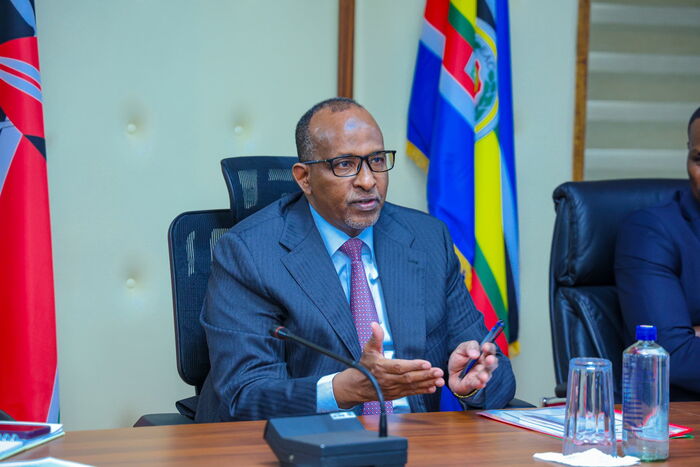
In an unexpected amplification of the skirmish between Kenya and malpractice in the medical field, Cabinet Secretary for Health Aden Duale has made public the intention to form a new specialized police unit solely for the purpose of catching unlicensed health workers, fake clinics, and corruption in the Social Health Authority (SHA). The announcement, made in a high-profile way during the very Sunday briefing, caused a stir in the health sector and law enforcement community.
According to CS Duale, the unit, which will be coordinated with the National Police Service, will be engaged in finding and sentencing “quack doctors,” illegal clinics, and other health workers who put the public at risk by providing medical services without proper licenses.
Authorities will also work on collecting evidence of fraud involving SHA compliance shortcomings, which is a big concern these days after the recent news about a new national health financing mechanism being plagued by irregularities.
Duale said, “If you are a quack doctor or healthcare practitioner who is not licensed, you should stop operations immediately,” and he went on to refer to the increasing evidence that some medical facilities are rendering medical services to patients without the staff having formal training or being under regulatory supervision.
The Health CS also pointed out that besides the feeble existing legal framework, there would be a new one—the scope of practice—that would ensure that no health worker could treat patients outside his or her area of skills and competences certified to him/her.
The decision is made following the death of a patient, Amos Isoka, who died due to complications that were allegedly caused by a dentist who had been working in an unlicensed clinic. The uproar over Isoka’s death turned into a nationwide outcry and greatly increased the pressure on the government to take immediate action against illegal health services.
The government’s emergency plan is going to use the consolidated unit to work with the Directorate of Criminal Investigations (DCI) and regulatory agencies like the Kenya Medical Practitioners and Dentists Council (KMPDC) in a close collaboration to arrest the wrongdoers, conduct inspections, and destroy the health networks that are not legit.
Patient safety advocates have reacted swiftly by popping up with their voices and calling the crackdown a victory of the long-awaited protective measure for the still communities. On the other hand, some health sector representatives doubt if merely enforcing the laws will be enough to tackle the problems of regulatory weakness and systemic fraud that have already come to light in the SHA framework.
The action of the government to bring law enforcement into the battle against medical fraud is the most radical public health enforcement shift that has ever occurred in recent memory, and it opens the door for a very difficult confrontation between the authorities that regulate Kenya’s health sector and the enemies of legitimate health operations.








Leave a Reply