

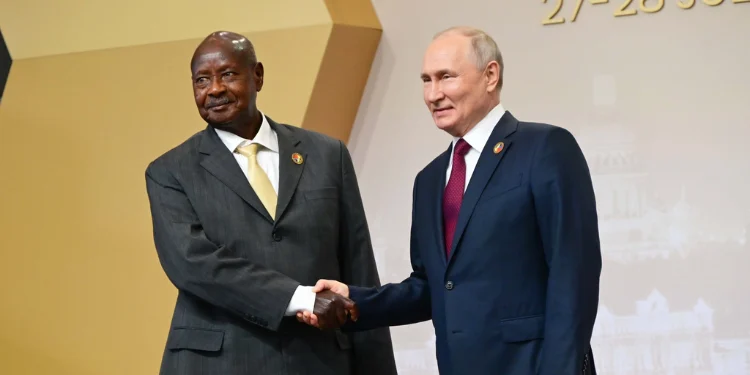
An astonishing turn of events, which gives extra weight to the controversial election result on an international scale, has occurred as the Russian government, in public, has given a warm approval to the conduct of Uganda’s presidential and parliamentary elections, consisting of the incumbent President Yoweri Museveni, who seems to be no less than decisive, offering a statement that could alter the diplomatic discourse around the disputed poll.
On Friday night, the Russian Foreign Ministry, through an official communiqué, commended the election process as “orderly and calm” and again expressed Moscow’s desire to strengthen the Uganda relations notwithstanding the rising international concern over the irregularities and cases of post-election violence.
The support from Russia comes alongside the partial results that indicate Yoweri Museveni, who has been in power since 1986, is leading his rivals by a great margin and is, therefore, on his way to securing another term.
The election featured eight presidential candidates, but the hegemonic reign of Museveni has been very clear right from the start of the counting, eliciting not only loud cheers but also tough condemnation from opposition figures who claim that there has been systemic suppression and fraud throughout.
Russia’s backing stands in stark contrast to the Western governments’ and human rights organizations’ denouncements, who have raised doubts about the election’s fairness, especially in view of the internet blackout and the limited number of observers allowed.
The statement from the Kremlin additionally confirmed the long-lasting relations between Moscow and Kampala in terms of both diplomacy and strategy. The involvement of Moscow with Uganda covers various fields such as military, trade, and political cooperation, and the election approval creates an image of both sides having equal regard and not interfering with each other.
Some analysts suggest that Russia’s stance could amplify Museveni’s international legitimacy, especially among the countries that are doubtful about the Western criticism.
Nevertheless, the endorsement comes at a time of heightened tensions within Uganda. Several districts have reported protests and skirmishes after Thursday’s voting, with opposition supporters and human rights groups decrying what they call brutal methods used by the police. The incidents that resulted in deaths have intensified the concerns over stability and human rights.
Diplomats indicate that the international response to the ongoing crisis will play a significant role in determining Uganda’s foreign relations for the coming months, as the different narratives of electoral legitimacy are still being told. Russia’s support places it as a major ally for Kampala in the face of increasing geopolitical attention.


Leave a Reply