

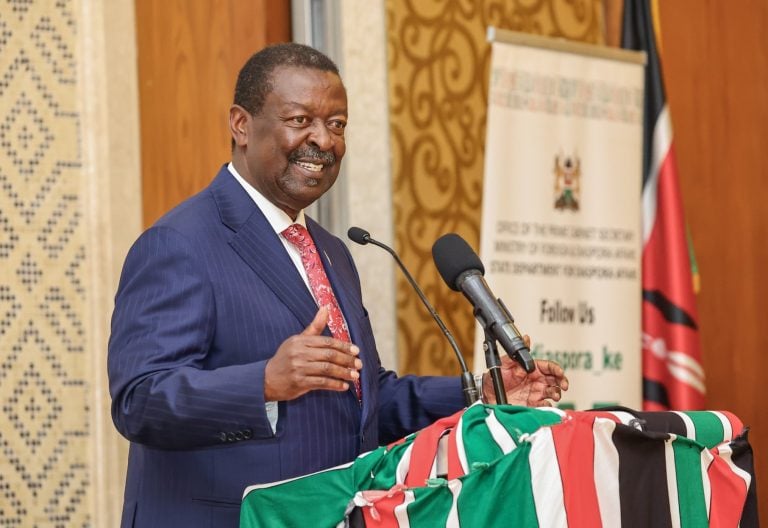
In a very shocking revelation that has brought to light the “invisible ghosts” that have been stopping the growth of the economy of Kenya, Prime Cabinet Secretary Mudavadi has narrated a very scary incident of how the mighty cartels at the Port of Mombasa literally killed a national transformation project.
During a very important interview on Wednesday, December 24, 2025, Mudavadi gave an account of a conspiracy that happened in the mid-1990s and that involved the world’s best investors from Singapore being “chased away” from Kenya by the local maritime mafia.
This disclosure gives a rare opportunity to see the hidden, behind-the-scenes of the decay that has always been the reason that the Port of Mombasa did not get to the international levels. As the Prime CS said, the “Singapore Dream,” a dream often spoken of by President William Ruto, was really in the hands of Kenya decades ago, but it was just a matter of time before it was killed by those who were getting money through the inefficiency of the port.
Mudavadi, who was the Minister for Finance from 1993 to 1997, said that he took it upon himself to bring a very high delegation to Singapore to get into a management partnership. The aim was so easy yet revolutionary: to bring the efficiency of the Port of Singapore—one of the busiest and most advanced ports in the world—to Mombasa.
“I myself went to Singapore to get this deal done, and I managed to get a technical team from the Port of Singapore to come to Kenya,” Mudavadi said to the reporter Alex Chamwada. The Singaporean specialists were reported to have brought with them to Mombasa a very expensive plan worth millions of shillings to automate systems, get rid of cargo delays, and not only modernize the whole infrastructure but also modernize it.
On the other hand, the coming of the foreign experts brought about an immediate and aggressive counterattack from local interest groups. These cartels, who got to enjoy the “chaos and manual loopholes” of the time, regarded international efficiency as a direct threat to their illegal revenue streams.
The Prime CS depicted a well-planned campaign of psychological and bureaucratic warfare employed to scare investors away. The Singaporean team faced constant “frustrations” at every port operation level.
Strategic bottlenecks were created, and the foreign experts were denied the administrative cooperation necessary to implement even the most basic reforms.
“The cabals of Mombasa did not want the port to have international standards. They combated the team from Singapore and harassed them until they decided to leave the country and quit the project,” Mudavadi revealed. This massive exit not only meant losing a partnership but also effectively “froze” the maritime potential of Kenya for nearly thirty years, giving the regional competitors a strategic advantage.
Mudavadi’s revelation is not happening by chance. It takes place at a time when Ruto’s government is encountering the same opposition as it tries to reform the health and energy sectors. By quoting the “ghosts of the 90s,” Mudavadi is suggesting that the present administration is very aware of how “corruption fights back” when it is challenged with modernization.
He cautioned that the same patterns of sabotage as those at the port are being tried against new government projects. The Prime CS reiterated that the “broad-based” government is now focusing on the eradication of these cartels to ensure that the present foreign direct investment (FDI) does not meet the same end as the disastrous Singapore deal.










Leave a Reply