
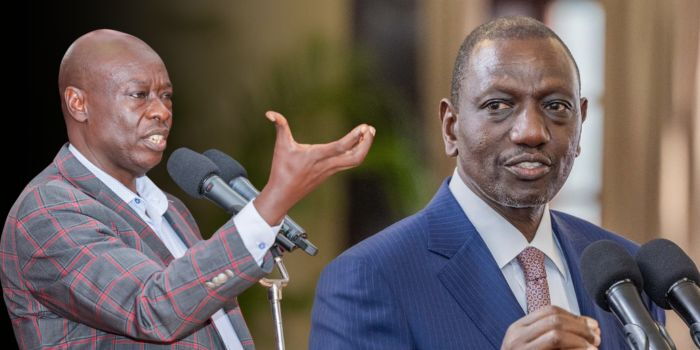
The painful wait has finally come to an end. In an earth-shattering move that is likely to change the economic fate of one of Kenya’s driest areas, President William Ruto has announced the end of the nightmare called “Turkana Oil.”
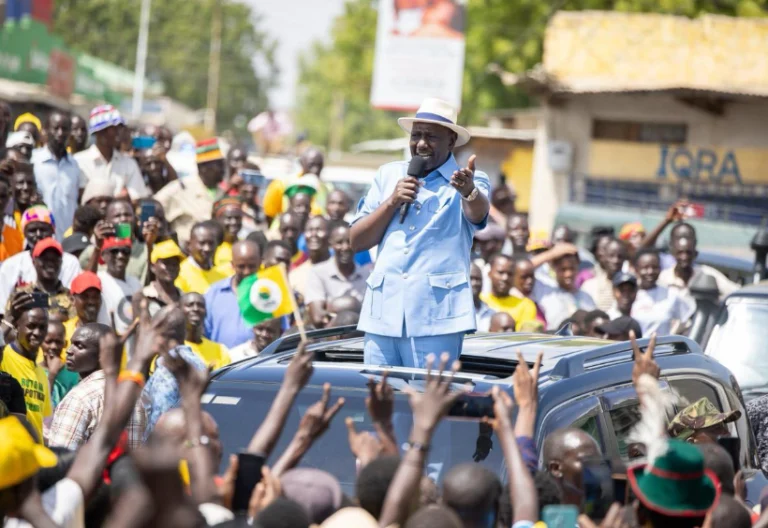
During his speech in Lodwar, a location seen as the epicenter of the issue, on Tuesday, December 16, the president told of his cabinet’s decision to radically renew the National Petroleum Policy, which has been unfavorably compared to the outdated framework of 2004 that has kept the region’s oil, black gold, under the serious threat of being locked away for more than twenty years.
This is not just another government promise. It is a total makeover. The new policy is the master key that is supposed to finally break the regulatory bottlenecks that have turned the oil wealth of Turkana into a mirage for the locals.
By aligning the sector with the 2010 Constitution, the State is vowing to ensure that the billions that are buried under the Ngamia oil fields will go to the community in cash, rather than just in headlines in Nairobi.
In his address to a very excited audience in Lodwar, the president did not use any euphemisms. He portrayed the situation as a matter of national emergency and a chance to right a historical wrong. “Turkana County will not be left behind as we move forward with our national transformation agenda,” Ruto exclaimed.
“In order to reap maximum benefits from the oil resources in Turkana and to ensure that the people of Turkana really benefit, the National Petroleum Policy has been approved by the Cabinet.” The President drew the line very clearly: the previously existing 2004 regulations were obsolete; they were meant for a Kenya that is no more.
The new policy is fearless. It is designed to lure in a massive influx of foreign capital, enforce the strictest governance measures to prevent “oil drain,” and most importantly, secure the direct flow of revenue to the people of Turkana. The announcement’s timing was intentional.
It followed the president’s high-stakes Cabinet meeting, which announced the National Infrastructure Fund (NIF), and was only a day later. This fund, which is a gigantic financial vehicle, is expected to have a budget of Ksh5 trillion. The plan is unambiguous.
The government is sure that fast industrialization will be the main outcome of their decision. The oil policy was linked to the bigger economic war Ruto announced, saying, “We have taken up an ambitious national project to get 10 million Kenyans out of poverty.”
He went on to say, “Through the National Infrastructure Fund and the Sovereign Wealth Fund, we will narrow the gap between the affluent and the poor.” The oil policy was shocking, but Ruto immediately supported it with cash.
He laid the foundation for a large Ksh660 million hostel project for Turkana University, part of a larger Ksh2.5 billion pool set aside for the county’s student housing of 6,000. Moreover, the town of Lodwar is going to have its dusty roads newly paved with bitumen, indicating that the government is confident that the town will become an oil city in the next decade.
The bold actions have already attracted powerful supporters. The Central Organisation of Trade Unions (COTU), usually a government critic, has supported the infrastructure project.
COTU has lauded the NIF as “long overdue,” thereby indicating rare collaboration between labor and state in the struggle for Kenya to climb from Third World to First World.





Leave a Reply