


In an aggressive and widely disputed advancement of the national drug war, President William Ruto has proclaimed that people participating in the trafficking of hard drugs like cocaine and heroin should be sentenced to death as part of a major overhaul of narcotics legislation.
This announcement has taken Kenya’s drug enforcement to a whole new level, and it has also opened up a heated discussion on the issues of legality, human rights, and public safety.
During a community gathering on Saturday in Uasin Gishu County, Ruto remarked that the drug trafficking business has been operating in Kenya for too long and the government was viewing it as a problem of law enforcement.
He mentioned how the dealers were usually very active in areas with large populations of youths and those with low resistance against drug abuse. Currently, the laws allow dealers to pay a fine and serve a short time in prison, which he disapproved of and called the penalties ineffective. He insisted that only the “ultimate penalty” can make the drug traders think twice about their illegal businesses.
“People who are selling heroin and cocaine are destroying our children. Those who are selling don’t use them; their own children don’t use them, yet they sell them to other people’s children,” the president said, framing the hardline stance as necessary to protect future generations.
Ruto’s proposed legal overhaul would recast trafficking hard drugs and illicit alcohol distribution as capital offenses, meaning convicted offenders could face execution by hanging.
The reforms also aim to enhance state powers to prosecute, seize assets linked to drug crimes, and dismantle the financial networks underpinning the narcotics trade.
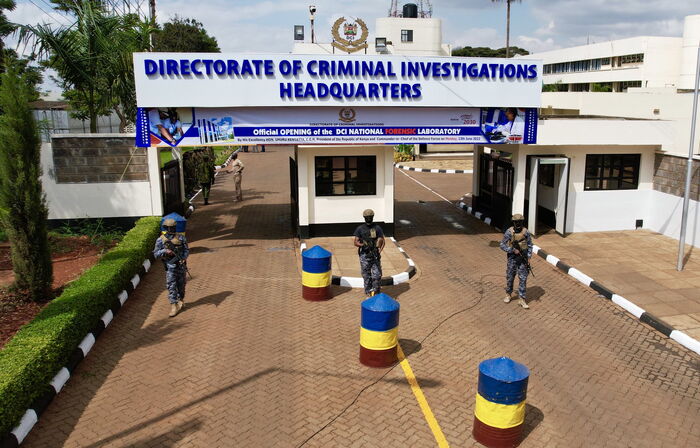
Along with capital punishment, the government intends to bolster the Anti-Narcotics Unit under the Directorate of Criminal Investigations by providing it with modern intelligence and enforcement resources comparable to those of the elite Anti-Terrorism Police Unit, thereby increasing its operational capacity.
Cabinet Secretary for Interior Kipchumba Murkomen, in his public speeches, stressed the president’s urgency and described 2026 as the year of crisis for substance abuse treatment while also revealing plans to recruit even hundreds more police officers who would work exclusively on anti-narcotics measures.
The policy’s main goal is to not only target drug traffickers but also to reduce the number of addicted youths drastically; however, it is going to lead to a storm of legal and human rights issues internationally because of the capital punishment that the government has decided to reintroduce, which has not been practiced in Kenya for decades.
As the debate heats up, legislators and advocacy groups are going to face very tricky issues regarding how to reconcile the need for public safety with the rights granted by the constitution; thus, they will be the direct participants in a heated national discourse about crime, punishment, and justice.








Leave a Reply