

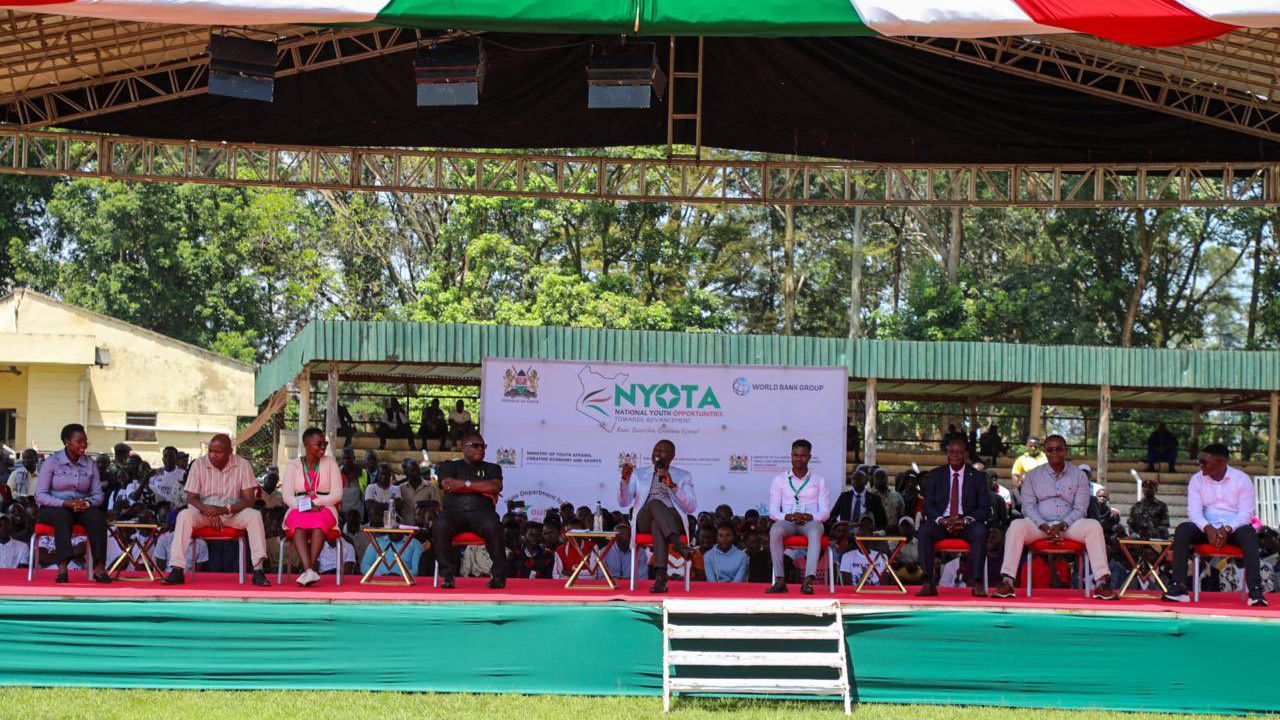
A major step forward for Kenya’s premier youth empowerment program, the National Youth Opportunities Towards Advancement (NYOTA) Project is now ready to disburse start-up capital to 27 counties all over the country, thus marking a vital second phase of funding that might change the lives of thousands of young entrepreneurs.
The announcement made by the State Department for MSME Development on Tuesday brings the program into the spotlight of economic discussion while Kenya is encountering a persistent problem of youth unemployment.
As per the official announcement, the distribution will start on Thursday, January 8, 2026, and last until Friday, January 16, covering counties such as Uasin Gishu, Nakuru, Nairobi, Kiambu, Makueni, Meru, Trans-Nzoia, and Turkana, to name a few.
It is mandatory that recipients of funds have gone through the three-day business skills training, which is a requirement by the government and is a signal of the government’s focus on preparedness and integrity.
The NYOTA Project, which is funded by the World Bank and was kick-started in late 2025, is aimed at supporting the most marginalized youth by providing them with money, training, and mentorship.
Besides receiving funds from grants, each of the participants will also take part in the two-month mentorship program led by the experts in business development and local entrepreneurs to enhance their chances of sustainable business success.
The officials have advised the grantees to strictly follow their business plans and, at the same time, cautioned that any misuse or diversion of funds might affect the goals of the project negatively.
Before the third and final grant disbursement, a new round of business development support trainings will be held; through this, the support is going to be really and practically based on business skills.
The second round of grant disbursements will take place all through the first phase in November 2025 in the west of Kenya, where more than 12,000 young people were given capital worth Ksh. 303 million. The first phase served as a testing ground for the incorporation of monitoring and savings into the NYOTA system.
The NYOTA Project has been a subject of both appreciation for its large-scale operations and its ability to close the gap in opportunities.
However, critics pointed out a number of issues, such as the amount of capital being insufficient compared to the costs of starting a business, and also the need for more than just intervention to curb misuse of funds. The government, however, is adamant that training on a larger scale and providing structured mentorship will effectively handle the risks.
The announcement of phase three, which will introduce support to 16 new counties, is expected to take place soon, as the authorities are already in the process of making the project’s presence countrywide.










Leave a Reply